What should you eat after a long bike ride?
Build a practical post-ride meal with carbohydrate, protein-rich food, fluid, and familiar ingredients—scaled to the ride and your next session.
 Field guide / what-to-eat-after-long-bike-ride
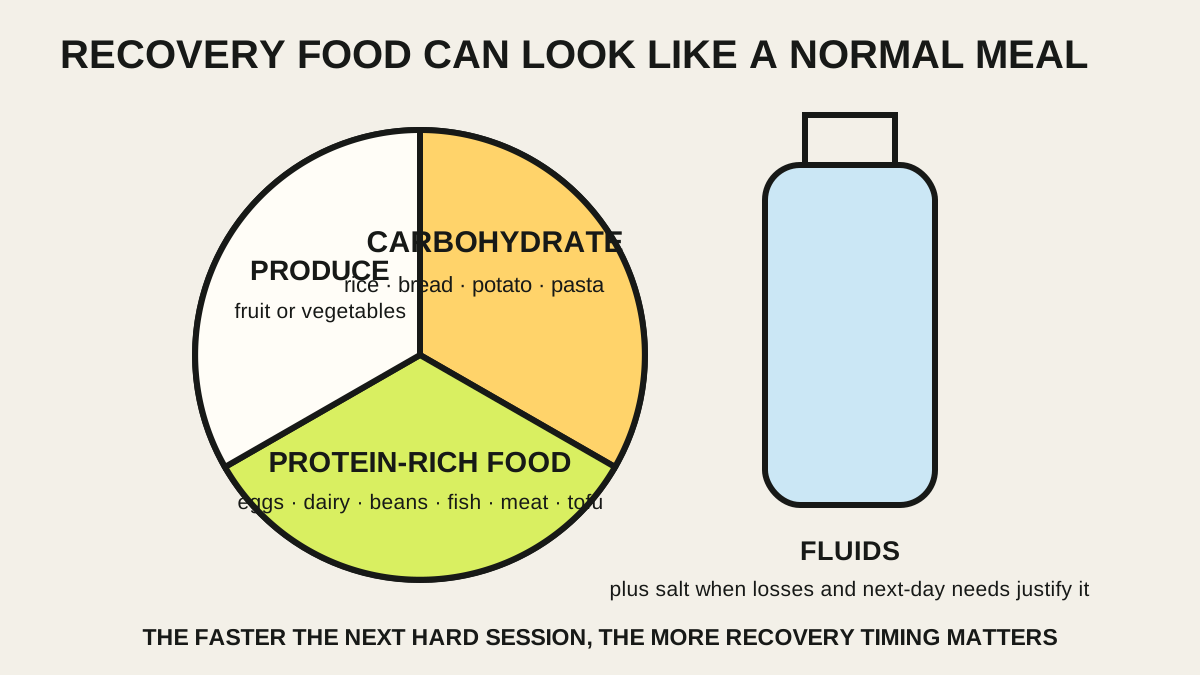
After a long bike ride, eat a normal meal built around carbohydrate, a useful serving of protein-rich food, fluids, and foods you tolerate. Add fruit or vegetables and enough salt to suit the meal, your losses, health needs, and next training session. It does not need to be a branded recovery product.
The short answer: if another demanding session is soon, begin recovery promptly with familiar carbohydrate, protein-rich food, and fluid. If tomorrow is easy and you fuelled the ride well, your next ordinary balanced meal is usually the practical answer. Extreme hunger after every long ride can be a prompt to review food during the ride, not only the meal after it.
The current conversation is mostly about cravings
A recent r/cycling thread asks riders for a favourite meal after a big ride. The replies range from sushi and burritos to fried chicken, eggs, pizza, shakes, and whatever is already in the fridge.
That variety is useful context: there is no mandatory cycling dish. Personal anecdotes do not establish an optimal recovery protocol, but they reveal the practical problem—after hours of sweet ride fuel, many riders want something savoury, substantial, and already available.
The next session sets the urgency
Recovery timing matters most when you must train or compete again soon. If another demanding ride begins later the same day or early the next morning, delaying food for hours can make it harder to restore fuel and meet total intake needs.
If the long ride ends a normal week and the following day is rest or easy movement, you have more flexibility. Eat soon enough to feel and function well, but do not turn a narrow “recovery window” into panic.
The British Cycling recovery guidance emphasises carbohydrate, protein, fluid, and planning around the next session. Sports-nutrition research also treats recovery as part of the athlete’s total daily intake rather than one magical food.
Build the meal from four decisions
1. Replace carbohydrate used on the ride
Long riding draws heavily on stored carbohydrate, especially when intensity rises. Choose a familiar carbohydrate base such as:
- rice, pasta, noodles, couscous, or potatoes;
- bread, wraps, oats, or cereal;
- fruit, milk, or yoghurt;
- beans and other mixed foods that also supply protein and fibre.
The amount depends on ride duration and intensity, body size, food eaten during the ride, appetite, health needs, and time until the next session. Avoid copying one grams-per-kilogram target without understanding its context.
2. Include protein-rich food
Add an ordinary protein source: eggs, dairy, fish, poultry, meat, tofu, tempeh, beans, lentils, or another food that meets your dietary needs. Distribute protein across normal meals instead of treating one huge shake as the entire recovery plan.
If solid food is unappealing immediately, milk, yoghurt, a smoothie, or a suitable alternative can bridge to a real meal. A supplement is convenience, not proof of a better recovery.
3. Replace fluid sensibly
Drink to address thirst and known losses, then continue normally with the meal. Hot weather, heavy sweating, long duration, and a short turnaround can justify more deliberate fluid and sodium planning. Food supplies fluid and salt too.
Do not force extreme volumes of plain water quickly. Individual sweat rates and clinical needs vary. If exact rehydration is important, weigh before and after comparable sessions under professional guidance and interpret the result with fluid consumed and bathroom stops.
4. Make it easy to eat
The meal needs to exist when you finish. Before the ride, prepare ingredients, refrigerate a complete meal, or know where suitable food is available. A brilliant plan that requires an hour of cooking while exhausted often becomes random snacking.
Five practical meal patterns
These are templates, not prescriptions:
- Rice bowl: rice, beans or chicken/tofu, vegetables, salsa, and yoghurt or avocado according to preference.
- Eggs and toast: eggs, several pieces of toast or potatoes, fruit, and milk or another drink.
- Pasta plate: pasta with tomato sauce, lentils, meat, or tofu, plus vegetables and water.
- Sandwich meal: substantial sandwich or wrap, soup, fruit, and yoghurt.
- Low-appetite bridge: smoothie or flavoured milk plus a banana and sandwich, followed by a normal meal when appetite returns.
Choose foods your stomach already knows. The finish line is not the ideal time to test a very fatty, spicy, high-fibre, or unfamiliar meal if those foods usually cause symptoms.
Review what happened during the ride
Arriving home desperate to eat everything can be partly ordinary appetite after a large energy expenditure. It can also mean the ride was under-fuelled, unexpectedly hard, longer than planned, or followed by a long delay before food.
Ask:
- Did I begin fed for the session?
- Did I eat and drink early enough during the ride?
- Did food remain accessible, or did I postpone it?
- Did I rely only on sweet products until they became unappealing?
- Was the ride much harder or hotter than expected?
- Is this hunger brief, or does it disrupt eating for days?
Use what to eat and drink on beginner rides to fix the on-bike part. Do not respond to repeated post-ride hunger by automatically restricting food; look at the whole training and eating pattern.
Alcohol is not a recovery drink
A beer may be a social choice after a ride, but it should not replace food and water. Alcohol can complicate rehydration, judgement, sleep, medication use, transport, and recovery. Eat, rehydrate, and make an informed decision appropriate to your health and circumstances.
Never drink alcohol before riding home, driving, or operating equipment.
Food safety still applies
Do not leave dairy, meat, cooked rice, cut produce, or other perishable food in a hot car or sunny bag for hours. Use a cooler with adequate ice or keep the meal refrigerated. Wash hands before eating, particularly after roadside repairs, chain handling, or public event facilities.
For an organised ride, keep post-finish food separate from dirty gloves, tools, and punctured tubes.
When a dietitian is worth it
Seek a qualified sports dietitian or clinician when you have a health condition, persistent gastrointestinal trouble, recurrent bonking, major unwanted weight change, signs of disordered eating, difficulty meeting energy needs, or a demanding race schedule. Generic internet advice cannot account for medical history, medication, body composition goals, cultural diet, budget, or training load.
Your next step
Before the next long ride, put one complete recovery meal in the fridge and one simple bridge snack where you can reach it. Fuel the ride, then record appetite, thirst, meal timing, and how you feel later that day and the next morning. Adjust the plan from that evidence—not from the most photogenic post-ride plate.
Sources and further reading
- British Cycling: maximise post-ride recovery
- Joint position paper: Nutrition and Athletic Performance
- r/cycling reader context: favourite meals after a big ride — used as a demand signal and menu context, not nutritional evidence.