What to do when a loose dog chases you while cycling
Use a calm stop, the bicycle as a barrier, a controlled retreat, and a clear bite-response plan instead of trying to improvise at speed.
 Field guide / what-to-do-dog-chases-you-cycling
If a loose dog commits to a chase, do not turn the encounter into an all-out sprint by default. Keep the bike predictable, check traffic, brake in a straight line when there is a safe place to stop, dismount with the bicycle between you and the dog, and back away only after the situation settles.
The short answer: control the road problem first, then interrupt the chase. Stop without swerving, put the bike between your body and the dog, avoid screaming or running, and retreat slowly without turning your back. If contact breaks skin, treat it as a medical issue—not just a bad ride.
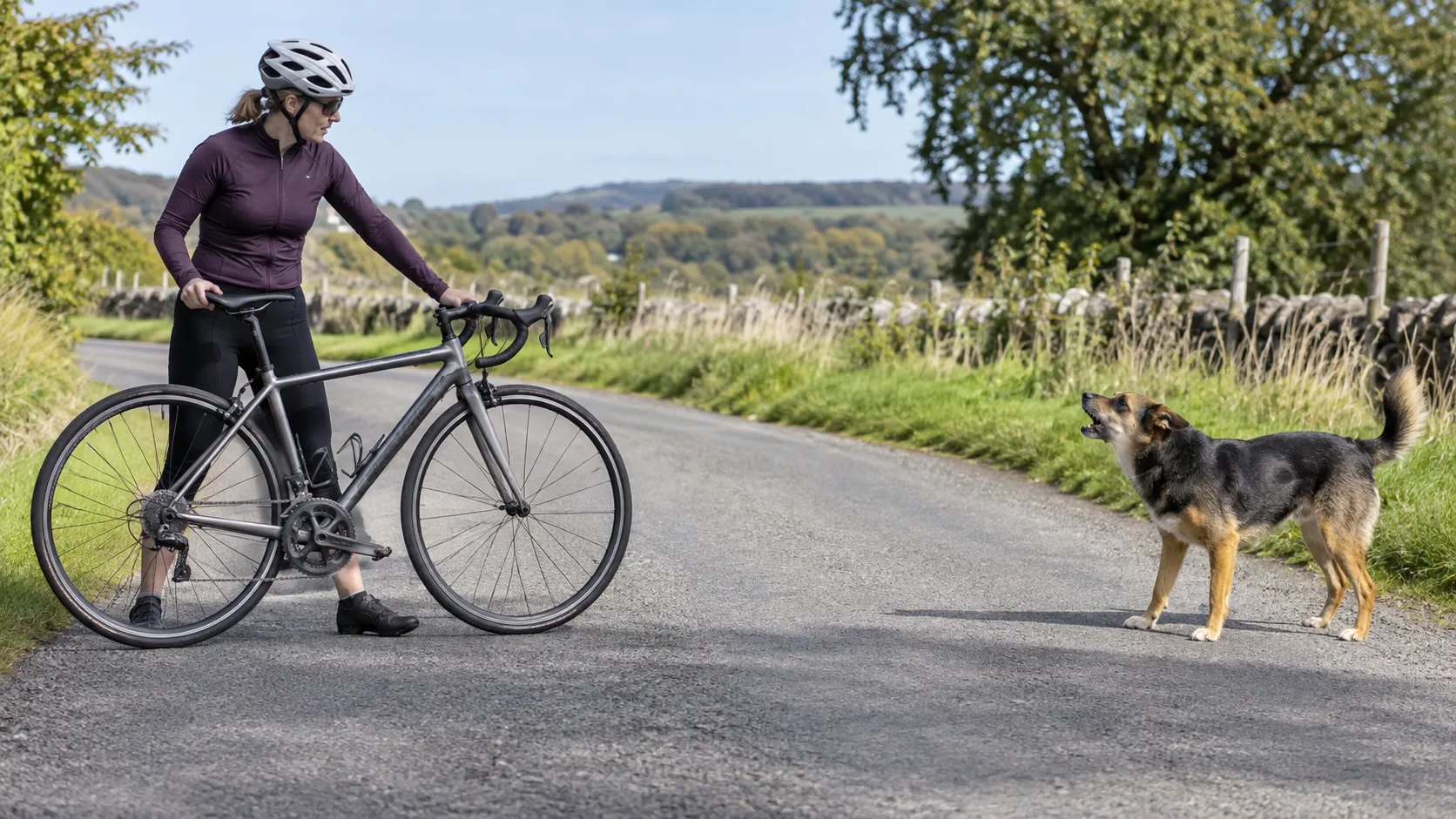
First decide whether stopping is safe
A dog can pull attention away from moving traffic, a pothole, another rider, or the road edge. Before reaching for a bottle or looking over your shoulder repeatedly:
- Keep both hands controlling the bike.
- Hold a predictable line rather than swerving away from the dog.
- Look ahead for traffic, escape space, and a stable stopping area.
- Brake progressively in a straight line.
- Signal or call clearly to nearby riders if you are in a group.
Do not attempt a sharp U-turn across the road. Do not kick while moving, unclip one leg to fend off the dog, or operate a deterrent while you still need both hands to steer and brake. Those actions can turn a chase into a fall.
If traffic makes stopping more dangerous, continue controlling the bike until you reach a safer position. There is no single manoeuvre that fits every road.
Interrupt the chase without escalating it
Current USPS dog-attack-prevention guidance tells people not to run past or away from a threatening dog, not to scream, to remain still where possible, and to put an object such as a bag or bicycle between the person and the dog. That advice is written for people on foot, so a cyclist must first get to a safe stop.
Once stopped:
- dismount on the side away from the dog if you have time and space;
- hold the bike upright between you and the dog;
- use a calm, firm voice rather than high-pitched shouting;
- avoid a hard stare, but keep the dog in view;
- do not reach toward, feed, or try to pet it;
- stand your ground until it pauses or backs away;
- retreat slowly without turning your back or tripping over the bike.
The goal is distance and an exit, not winning a confrontation. A bicycle is replaceable; do not entangle yourself in it if the dog comes around the barrier.
Why “just sprint” is unreliable advice
Speed may carry a rider out of one dog’s territory, but it can also prolong the chase, overextend the rider, or produce a crash if the dog crosses the front wheel. It is especially poor as a universal plan on a climb, in traffic, on a wet road, or with more than one dog.
Reddit threads often recommend water bottles, air horns, or chemical deterrents. Those anecdotes do not establish that one tool is safe, legal, or effective in every encounter. Spray legality and allowed formulations vary by place; wind can return spray toward the rider; and any device is dangerous if it takes a hand away from control at speed.
If you routinely carry a lawful deterrent, learn its instructions and limits before the ride. Do not make the first use an improvised moving-bike test.
Plan for a known dog location
Repeated encounters deserve a route decision rather than repeated bravery.
- Mark the exact location while stopped somewhere safe.
- Use another road until the hazard is addressed.
- Report a loose or aggressive dog to the appropriate local animal-control or public-safety authority.
- Record the date, time, location, description, direction of travel, and what occurred without confronting the owner.
- Tell regular riding partners and route organisers about the objective hazard.
- If the encounter involves an owner, keep the conversation calm and prioritise leaving safely.
Local leash, reporting, and self-defence laws differ. Use the local authority’s process rather than assuming advice from another country applies.
If the dog knocks you down
Once on the ground, protect your head and neck as much as possible and use the bike, helmet, bag, or another available object as a barrier. Call emergency services if the attack is continuing, injuries are serious, bleeding will not stop, or you feel faint or weak.
After the immediate danger, move yourself and the bike out of traffic if you can do so safely. Do not resume riding until you have checked yourself for injury and the bike for steering, wheel, brake, frame, and control damage. A damaged helmet after an impact needs replacement according to its maker’s instructions.
Treat every skin break promptly
The CDC advises washing dog bites and scratches thoroughly with soap and water. Deep wounds need pressure with a clean, dry cloth and prompt medical attention. Seek medical advice if the wound is serious, becomes red, painful, swollen, or associated with fever; if the dog’s rabies vaccination is unknown; or if your tetanus protection may not be current.
Rabies risk varies by country and animal. It is time-sensitive and must be assessed by a healthcare professional or public-health authority, not by the dog’s appearance or an internet comment. Report the bite through the local process and obtain owner and vaccination information only if doing so is safe.
Rebuild confidence after the encounter
A frightening chase can make every bark feel like the start of another attack. Do not force an immediate return to the same road. Choose a familiar route with good sight lines, ride with a trusted person, and practise a controlled stop and dismount in an empty area so the motor skill is available under stress.
For the broader return-to-riding process, use how to return after a first crash and how to plan a safer first route.
Your next step
Practise one straight-line stop, dismount, and bike-barrier position in a traffic-free area—without a dog present. Then review your usual routes for known loose-dog locations and decide in advance which road, reporting channel, and exit you will use.