What to do after a frightening cycling near miss
Get safe, check yourself and the bike, record useful facts, choose whether to report, and return to riding without rushing the process.
 Field guide / what-to-do-after-cycling-near-miss
After a close pass, turning conflict, or other near miss, get fully out of traffic before doing anything else. Let the vehicle go. Check your body, bike, and ability to think clearly, then decide whether you need emergency help, a lift home, documentation, or a report.
The short answer: safety first, facts second, analysis later. Do not chase the driver, argue in the roadway, or force yourself to continue while shaking or distracted. A frightening response can be normal after a threatening event; return to riding in stages and seek help if distress persists or disrupts daily life.
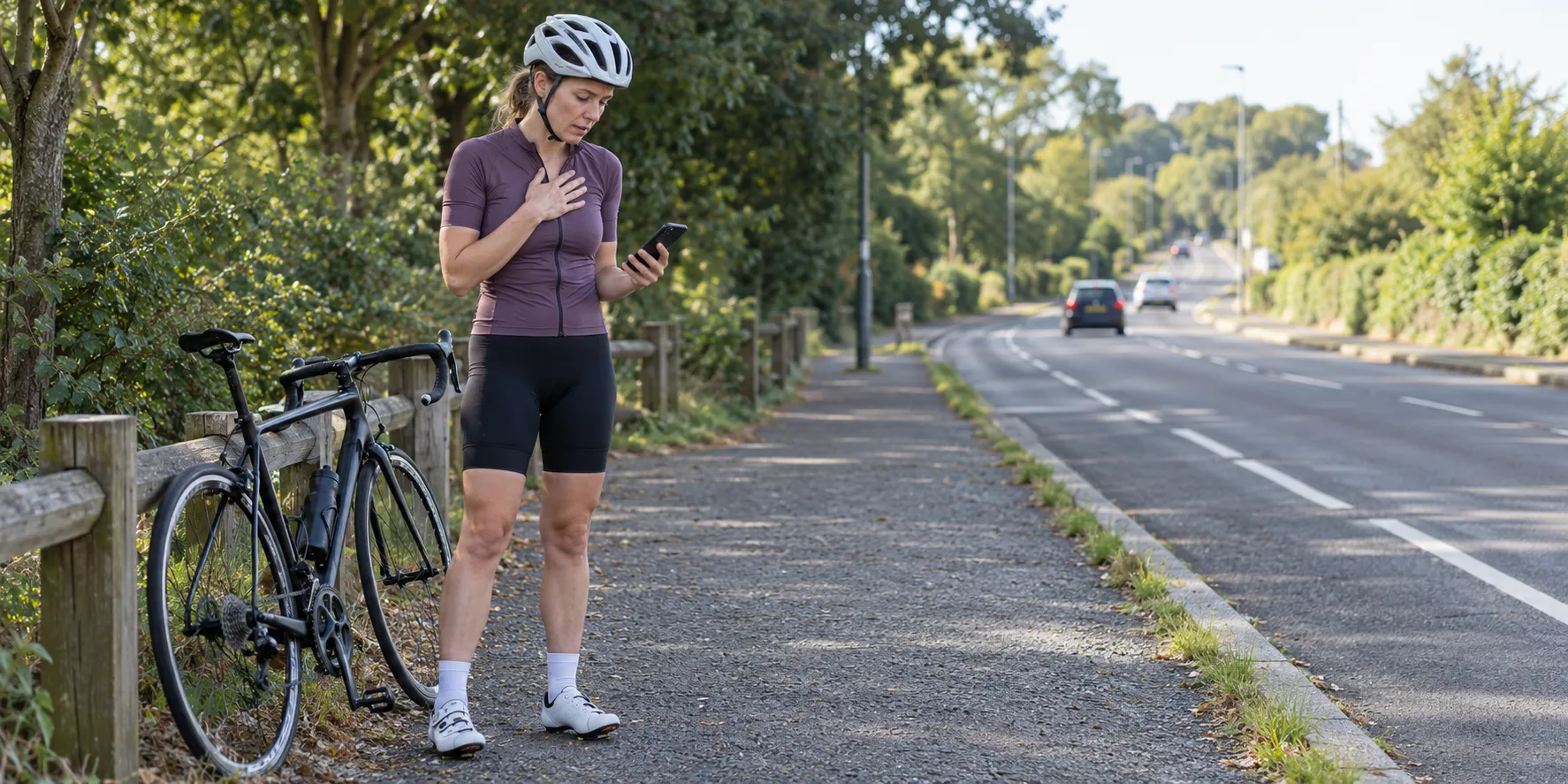
The first five minutes
1. Move somewhere genuinely safe
Leave the live lane, junction, blind bend, or narrow shoulder. Choose a pavement or verge where cycling is permitted, a car park, business, station, or other visible place. If a driver is threatening or following you, go toward people and call emergency services rather than going home.
2. Check for contact and symptoms
A “near miss” may still include a mirror strike, kerb impact, pothole hit, hard braking, or foot-down twist. Look for bleeding, head impact, pain, dizziness, confusion, weakness, unusual breathlessness, or difficulty bearing weight. Adrenaline can make it easy to minimise an injury.
If there was a collision, use the emergency and reporting rules for that location. Do not let an unqualified roadside opinion decide that you are fine.
3. Check whether you can control the bike
Before moving again, inspect wheel attachment, tyre condition, brake function, steering, bars, levers, pedals, and anything struck during evasive action. A wheel knocked sideways or a tyre damaged by a kerb can turn the next ride into a crash.
If impact occurred, use how to inspect a road bike after a crash and arrange transport when the result is uncertain.
4. Let your attention recover
Do not resume while your hands are shaking, vision is narrowed, or thoughts are looping so strongly that traffic awareness is compromised. Sit, breathe slowly, call someone, and choose a safe way home.
Record facts while they are fresh
Only when safely stopped, note:
- date and exact time;
- road, direction of travel, nearest junction, and lane position;
- vehicle colour, type, registration if remembered, and direction it went;
- what happened before, during, and after;
- witnesses and available contact details;
- nearby cameras, businesses, buses, or houses that may hold footage;
- weather, visibility, and road conditions;
- any injury or bike damage.
Save original camera files without trimming or repeatedly exporting them. Do not post an accusation with uncertain identifying details while you are still upset. Documentation is most useful when it is factual, time-stamped, and preserved for the relevant authority or insurer.
Decide whether and where to report
Reporting rules and evidence windows vary by country, state, and police force. Use the official police or road-safety portal for the incident location. Some authorities accept reports of dangerous driving or cycling near misses even without contact; others use different categories or evidence requirements.
Report urgently when someone is injured, danger is ongoing, a driver threatens or follows you, the road is blocked, or local law requires immediate action. For a non-emergency, check the official channel promptly so video-retention or filing deadlines are not missed.
Do not assume an online community can tell you whether an offence occurred. Reddit can show that close passes and junction conflicts are common concerns, but it cannot see the full event or replace local law enforcement, medical assessment, or legal advice.
Review the route without blaming yourself
Later, when calm, separate two questions:
- What did another road user do?
- What can make your next ride more controllable?
The second question does not excuse dangerous driving. It helps identify practical options such as a lower-traffic route, different departure time, more visible lane position, a simpler junction, or an on-road skills course.
NHTSA advises choosing routes with less traffic and lower speeds when possible and riding predictably where others expect to see a cyclist. Apply local laws and training; do not interpret “be visible” as an obligation to squeeze into the gutter or accept an unsafe surface.
Use road cycling safety and positioning and planning an unfamiliar ride to change the specific conflict point rather than abandoning every road.
Return to riding in stages
It is reasonable to end the day’s ride. When you are ready:
- Start on a short, familiar, lower-traffic route.
- Ride with a trusted person if that feels easier.
- Practise shoulder checks, signalling, braking, and lane changes away from traffic first.
- Revisit the location only if doing so serves you; avoidance is not a test of character.
- Stop the reset ride while confidence and attention are still intact.
NHS guidance notes that fear, anger, heightened alertness, intrusive memories, and avoidance can be normal short-term responses after a traumatic event. Support from trusted people and a return to normal routines can help. If distress persists beyond a few weeks, causes nightmares or panic, or interferes with sleep, work, travel, or safety, seek qualified mental-health support.
Equipment can support, not guarantee, safety
Lights, reflective details, a mirror, radar, or camera may help with detection, awareness, or evidence. None creates a protective bubble, and buying more equipment cannot make another person’s manoeuvre safe.
Start with legal lights, a sound bike, a route appropriate to your skills, and predictable riding. Add technology only when you understand the specific problem it solves. A camera may record an incident; it does not prevent one.
Your next step
Write the factual incident note, save original evidence, and decide whether the official local reporting threshold is met. Then choose one small return ride with an easier route and a clear bailout point. If your body or mind is still signalling that something is wrong, get help before trying to push through it.
Sources and further reading
- NHTSA: bicycle safety, route choice, visibility, and predictable riding
- NHS England: common reactions and support after a traumatic event
- Police.uk: road collision and incident guidance
- r/cycling reader context: feeling rattled after a close pass
- r/cycling reader context: how hostile road incidents affect returning to riding — both threads were used as demand signals; personal accounts were not treated as verified incident data.