What Garmin recovery time means for cyclists—and what it does not
Interpret a Garmin recovery-time estimate as time before another similar hard workout, then decide between rest, easy riding, or training using context and symptoms.
 Field guide / what-garmin-recovery-time-means-cyclists
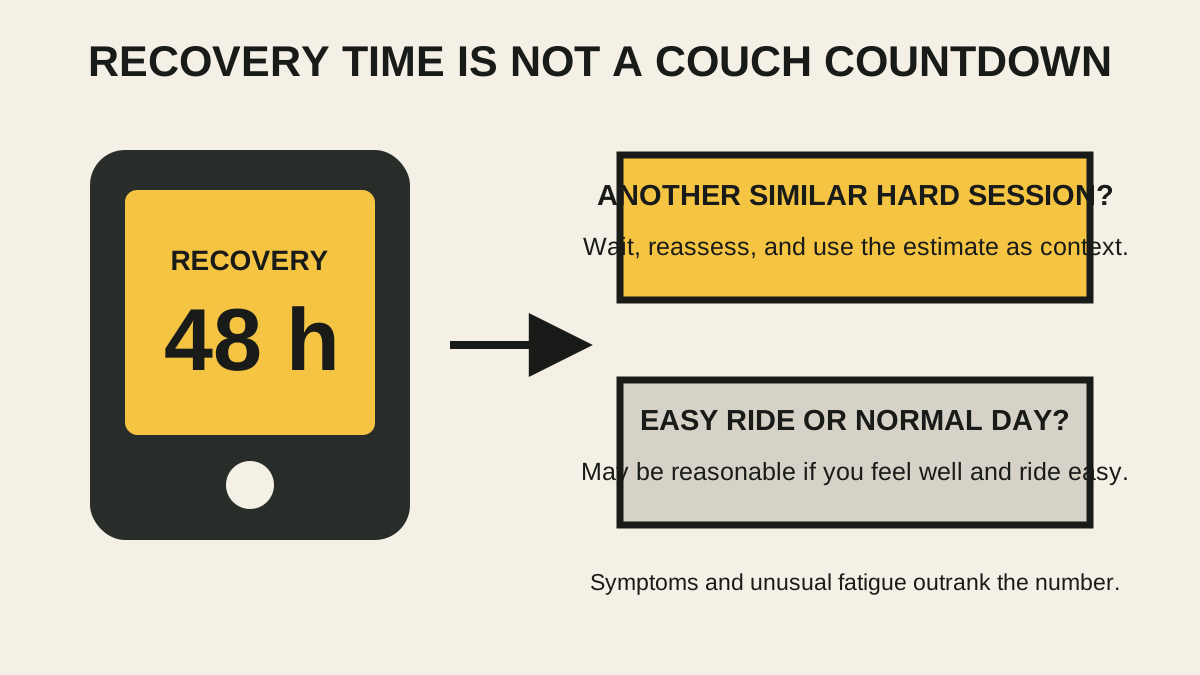
Garmin recovery time estimates how long recovery may take before another workout of similar intensity. A display of 48 hours does not automatically mean 48 hours without walking, commuting, or easy cycling. It is a training estimate that should shape the next hard-session decision, not overrule symptoms or common sense.
The short answer: read the number as “time before I am likely ready to repeat a similarly demanding workout.” If you feel normal, an easy ride may still fit. If you have unusual fatigue, illness, worsening soreness, or pain, rest and investigate even when the device says zero.
Why the number is easy to misread
A recent discussion asked whether a long recovery recommendation meant the rider should stop riding entirely for several days. The confusion comes from treating one number as a universal instruction.
Garmin’s support documentation says recovery time estimates the period before another workout of similar intensity. It can range from zero hours to four days and updates as the device receives more activity and recovery information.
That means these are different questions:
- Am I ready for another interval session or hard group ride?
- Can I perform an easy recovery spin?
- Can I commute gently?
- Am I medically well enough to exercise?
The watch can contribute to the first question. It cannot answer all four by itself.
What can affect the estimate
On supported devices, Garmin lists factors such as:
- the training effect of the completed activity;
- recovery time already remaining before the next activity;
- training intensity;
- stress;
- sleep quality;
- daily activity;
- the device’s developing model of your fitness.
The displayed value can rise or fall as new data arrives. Recovery times from separate activities are not simply added together; the system recalculates.
Poor inputs can produce poor context. A loose optical heart-rate reading, missing ride, inaccurate maximum heart rate, power-meter error, or a device that has not learned your normal training can change how the activity is interpreted. Check the data trace before treating the output as precise.
Use three checks before deciding
1. What are you planning to do?
Compare like with like. If yesterday was a hard two-hour group ride and today was meant to be threshold intervals, a long recovery estimate supports postponing or reducing the second hard day. If today is a 25-minute gentle spin, the decision is different.
“Zone 2” is not automatically recovery. A long endurance ride still adds load, and a rider with incorrectly set zones may be working harder than the label suggests.
2. What does your body say?
Check for:
- unusual resting fatigue or irritability;
- heavy legs that do not improve during a gentle warm-up;
- worsening local pain rather than general tiredness;
- poor sleep, illness symptoms, or loss of appetite;
- dizziness, abnormal breathlessness, or an unusual heart response;
- declining performance across several sessions.
Pain and illness are not training metrics to push through. Read soreness versus pain on a new bike if the issue is physical discomfort rather than a number.
3. What does the recent pattern say?
One estimate is less informative than a week of training. Review hard days, total duration, other sports, work, travel, sleep, and life stress. A demanding job or strength session still contributes to fatigue even when it was not recorded as cycling.
If recovery time repeatedly looks implausible, verify profile settings, sensors, heart-rate zones, power zones, and firmware using the manual for your exact device. Give the device several representative activities to learn your baseline.
A practical decision table
Long estimate, but you feel normal
Skip or soften the next hard session. An easy short ride may be reasonable if it remains genuinely easy and you are otherwise well. Set a turnaround point and avoid converting it into an unplanned chase.
Short estimate, but you feel poor
Rest. The number does not clear illness, injury, sleep deprivation, dehydration, or persistent fatigue. Reassess later and seek qualified advice when warning signs are present.
Estimate jumps after an easy ride
First inspect the recorded intensity and sensors. A heart-rate spike, incorrect zones, or a ride that was longer or hillier than expected may explain it. Garmin also says new activity data can recalculate the remaining time rather than merely add hours.
Estimate stays high every day
Look for repeated hard riding, inadequate easy days, poor sleep, high stress, or inaccurate settings. If performance and wellbeing are also deteriorating, reduce load and get coaching or clinical advice appropriate to the symptoms.
You are training for enjoyment, not an event
You do not need to organise your life around a countdown. Use it as a reason to ask whether another hard day adds enjoyment or merely fatigue. Consistency with enough recovery usually beats alternating heroic rides and forced layoffs.
Build a better weekly rhythm
For a new rider, a simple structure is often enough:
- one or two genuinely demanding days separated by easier days;
- comfortable rides that stay comfortable;
- at least one day with no cycling obligation;
- gradual increases rather than simultaneous jumps in intensity and duration;
- sleep and food treated as part of training.
Our beginner training plan without a power meter shows how to use perceived effort and the talk test. The guide on how many days a beginner should ride helps set frequency before optimising device metrics.
Do not chase a zero
Recovery is not a finish line where adaptation switches on at 0 h. The estimate is deliberately simplified. Waiting for zero before every ride can make easy movement seem forbidden, while ignoring every long estimate can stack hard sessions until quality collapses.
Use the number consistently:
- Read it after a demanding ride.
- Compare it with the next planned session.
- Check sleep, soreness, energy, illness, and recent load.
- Adjust the next hard session—not your identity as a cyclist.
- Record what happened so you learn whether the estimate is useful for you.
Your next step
Open the last seven days of activities and mark each ride easy, moderate, or hard based on what you actually did. Put space between hard days, then use the next recovery-time estimate as one input to that plan. If your body and device disagree, investigate the reason rather than automatically obeying either one.