Used road bike with non-original components: bargain or red flag?
Audit a used road bike with downgraded or mismatched parts by reconstructing its original specification, checking compatibility and safety, and pricing the bike as it sits.
 Field guide / used-road-bike-non-original-components
Before you view or pay
Check fit, condition, and starter gear first
Use the buying checklist to choose the right path: used-bike viewing, first-bike fit and type, hidden repair costs, or starter gear.
Non-original parts do not automatically make a used road bike bad. Riders replace worn components, change gearing, and move equipment between bikes. But unexplained downgrades, unidentifiable brakes, mixed generations, or missing proprietary hardware turn the purchase into an audit—not a bargain based on the frame logo.
The short answer: identify the exact frame first, reconstruct the factory specification, and verify every changed part as a complete working system. Price the bicycle for its current components and condition. If the seller cannot explain major changes or allow an independent inspection, walk away.
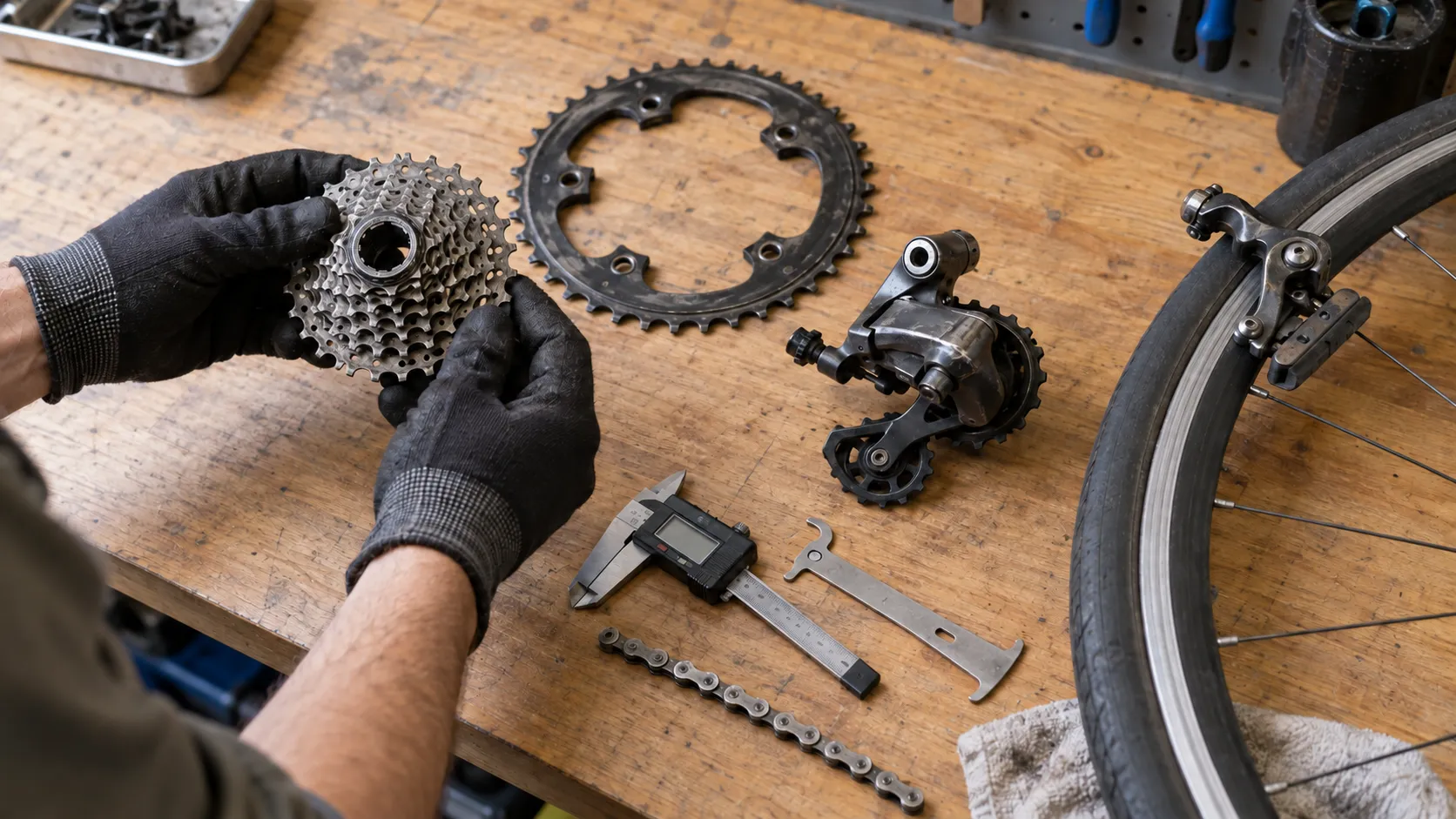
Why mixed parts deserve questions, not instant rejection
A recent r/whichbike post considered an older carbon road frame fitted with lower-tier shifting and unfamiliar rim brakes. The original specification found online appeared different. That is a recurring used-bike problem: the model name suggests one value while the bike in front of you may be a rebuild assembled from unrelated parts.
There are innocent explanations:
- original parts wore out and affordable replacements kept the bike running;
- a previous owner moved premium components to a new frame;
- gearing or controls were changed for fit and terrain;
- the bike was sold as a frameset and never matched a complete-bike specification;
- regional builds differed from the catalogue you found.
There are also expensive explanations: crash damage, stripped threads, a broken groupset, counterfeit or unsuitable parts, a stripped donor bike, or a hurried resale. Evidence separates them.
Identify the frame before valuing anything
Ask for clear photographs of:
- frame serial number and any model-year label;
- complete drive and non-drive sides;
- fork crown, steerer area, head tube, and bottom bracket;
- cable stops, brake mounts, dropouts, and seatpost clamp;
- every component model code;
- receipts for frame repair or replacement parts.
Compare geometry, paint, routing, mounts, and serial format with the manufacturer’s archive. Image search alone can confuse adjacent years and visually similar models. A frame may also have been repainted, which is not necessarily unsafe but removes useful inspection clues and demands documentation.
Check ownership separately through the serial number and proof of purchase. Use the stolen-bike avoidance checklist before arranging payment.
Build a changed-parts table
Create four columns: factory part, current part, why changed, and evidence. Cover at least:
- shifters, front and rear derailleurs;
- crank, chainrings, cassette, and chain;
- brake levers and calipers;
- wheels, freehub, axles, and tyres;
- fork, headset, stem, handlebar, and seatpost;
- saddle, pedals, and accessories only after the safety systems.
The goal is not originality for its own sake. It is discovering whether the current bike is compatible, serviceable, and worth its price.
Check systems, not labels
A lower-tier derailleur can shift perfectly. A famous top-tier derailleur can be incompatible or worn out. Verify:
- speed count and cable-pull or electronic family;
- shifter and derailleur compatibility;
- derailleur capacity for the chainrings and cassette;
- chain type and length;
- freehub and cassette interface;
- brake-lever pull with the caliper type;
- pad and braking-surface compatibility;
- stem, handlebar, steerer, seatpost, and saddle-rail dimensions;
- all required spacers, washers, clamps, and fasteners.
Shimano’s compatibility documents are model-code based for exactly this reason. A component family name such as “Sora,” “105,” or “11-speed” is not enough to approve a mixed system.
Unfamiliar brakes deserve a stop, not a guess. Find a maker, model, manual, pad type, service parts, and applicable safety certification. If none can be established, price replacement calipers and possibly compatible levers before considering the bike.
Inspect the reason for the downgrade
Ask the seller directly:
- Which parts are not original?
- Who installed them and when?
- Why were the original parts removed?
- Was the bike crashed, transported on a damaged rack, or repaired?
- Are the original parts, receipts, and manuals available?
- Has a new chain been tested under load without skipping?
Vague answers do not prove wrongdoing, but they increase uncertainty. A knowledgeable seller with many parts can be competent; that profile is not evidence that this particular assembly is safe.
For carbon, inspect according to the frame maker’s guidance and use a qualified carbon specialist when impact or clamping damage is possible. Trek’s carbon-care guidance warns that damage may be hidden and recommends stopping use when integrity is in doubt. A tap test or clean paint cannot certify a frame.
Price the bicycle that exists now
Do not pay for the original groupset twice—once in the model’s reputation and again when you replace the current equipment.
Calculate:
current-bike value = comparable frame and current parts − immediate service − missing parts − uncertainty reserve
Include:
- tyres, chain, cassette, cables, pads, and bar tape;
- wheel or hub service;
- replacement of unidentifiable brakes or cockpit parts;
- professional carbon and mechanical inspection;
- labour and special tools;
- obsolete proprietary hardware;
- reduced resale value from undocumented changes.
Compare the total with a less glamorous but complete, documented bicycle. The used-bike fair-price guide helps structure that comparison.
Use the buying funnel in the right order
Before money changes hands:
- confirm the bike is the right size;
- establish identity and ownership;
- audit the changed parts;
- arrange an independent inspection;
- test ride only after it is considered safe;
- calculate immediate service and replacement cost;
- pay based on the current build, not nostalgia.
Open the road-bike buying checklist and take it to the viewing. It is easier to walk away from a questionable bargain before the frame brand starts making decisions for you.
Your next step
Ask the seller for the serial number, both full-bike side views, and close photographs of every model code. Build the factory-versus-current table before arranging a viewing. If the explanation, compatibility, or structural history remains unclear, choose another bike.
Sources and further reading
- Shimano component compatibility documents
- Shimano manuals and technical-document search
- Trek Carbon Care: inspection after possible damage
- r/whichbike demand signal: older carbon frame with downgraded and unfamiliar components — used as an editorial question signal, not technical evidence.