Is a rear bike radar worth it for road cycling?
Understand what bicycle radar can detect, where it helps, what it cannot tell you, and how to test one without replacing shoulder checks or safe road position.
 Field guide / is-rear-bike-radar-worth-it
A rear bicycle radar can be worth buying if you spend meaningful time on quieter roads where an alert to approaching traffic reduces surprise and helps you time a deliberate look behind. It is less transformative in constant urban traffic, and it must never become permission to move across the road without checking.
The short answer: radar answers “something is approaching from behind.” It does not reliably answer “the driver has seen me,” “the pass will be safe,” or “the lane is clear.” Buy it for earlier awareness, not certainty.
What riders are really asking
Recent high-engagement r/cycling threads ask whether a radar is worth the price, whether it is a game-changing safety upgrade, and whether it fits a rider who already uses a mirror in town. The enthusiasm is real, but personal confidence and purchase satisfaction are not crash-effectiveness evidence.
The useful question is narrower: on your normal roads, will an earlier alert improve your awareness without changing sound safety habits?
What rear bicycle radar does
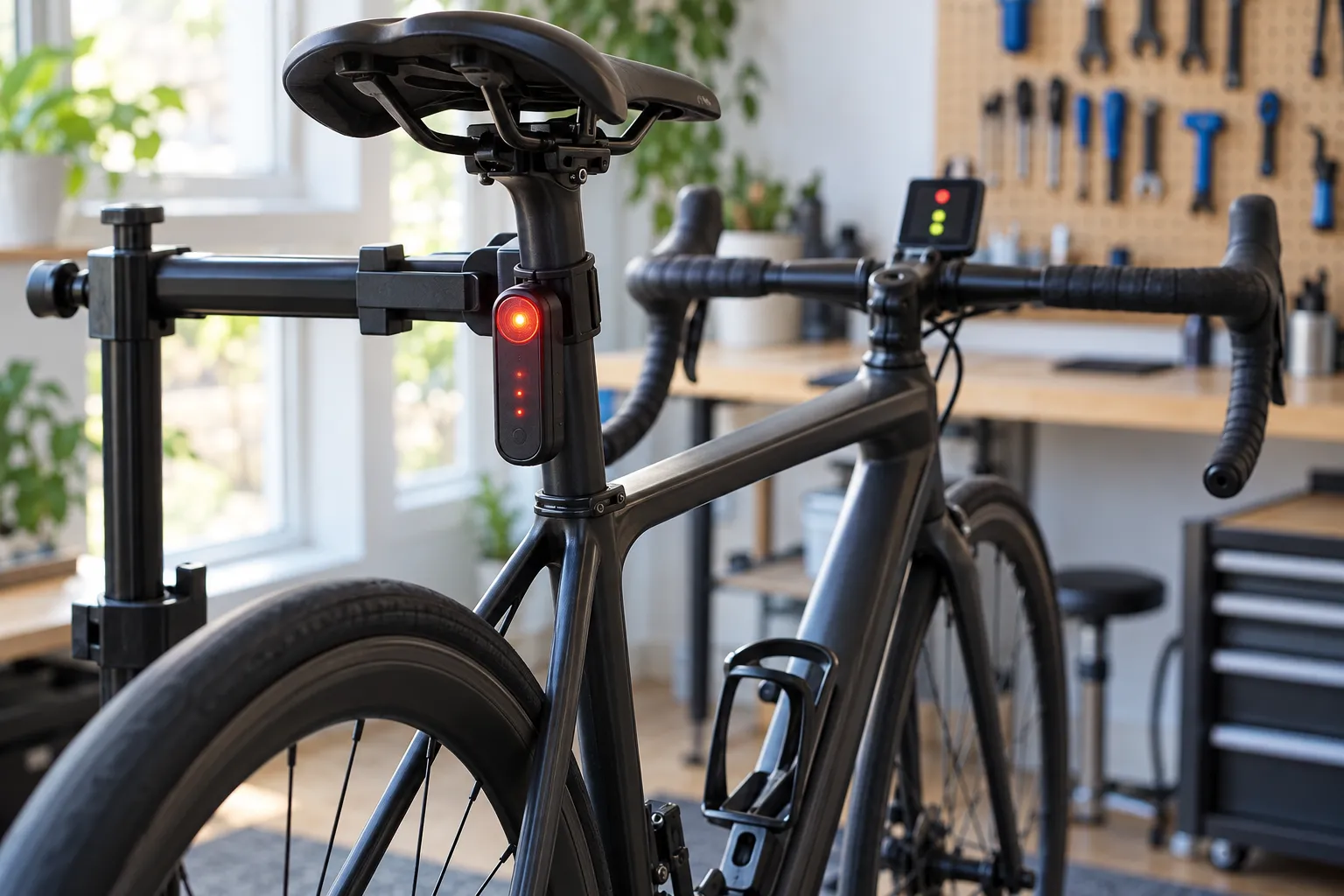
A typical unit mounts at the rear of the bike and detects objects approaching from behind. It sends alerts to a compatible bike computer, watch, phone, or dedicated display. The display may show more than one detected target and a relative threat level based partly on approach speed.
Some units also include a rear light and can change its flash pattern when a target approaches. Features, compatibility, detection behaviour, battery life, and legal light modes vary by model and region. Read the exact manual before buying.
Garmin’s current support guidance says performance deteriorates if the sensor is obscured by a wheel, bag, luggage, strap, or fastener, or if the unit is mounted at a poor angle. That makes mounting part of the safety check, not an aesthetic detail.
Where radar adds the most value
Radar tends to be most informative on:
- quiet rural and suburban roads with gaps between vehicles;
- solo rides where another rider is not calling traffic;
- fast open sections where wind noise masks an approaching vehicle;
- long rides where an alert can interrupt fading attention;
- roads where you need to prepare for a turn or lane change and want an early cue to look.
In those settings, silence followed by one alert carries useful information. In dense city traffic, a device may report vehicles almost continuously. That does not make it useless, but the signal-to-noise ratio changes.
What radar cannot tell you
Treat these as hard limits:
- No alert does not prove the road behind is empty.
- A detected vehicle may still turn, stop, accelerate, pass closely, or be followed by another target.
- Radar does not prove a driver has seen you.
- It does not show the full road scene as a mirror or direct look can.
- It cannot choose a safe lane position for a blind bend, pinch point, junction, or parked-car door zone.
- A flat battery, blocked sensor, poor mount, lost connection, or device fault can remove the information.
The correct response to an alert is usually heightened attention: hold a predictable line, assess the road ahead, and look directly before any lateral movement. It is not to dive into debris or a drainage channel to make room.
Radar, mirror, rear light, or shoulder check?
These tools overlap but do different jobs.
- Radar gives an early electronic alert to some approaching targets.
- A mirror shows a limited rearward view when positioned and checked well.
- A rear light helps other road users notice you but does not tell you what they are doing.
- A direct look gives context before a manoeuvre, although the rider must learn to look without swerving.
Radar can complement all three. It should replace none of them by assumption. Learn how to look behind without swerving in a traffic-free area, then use road positioning guidance for the complete decision.
Check compatibility before price
Before buying, confirm:
- The radar works with the exact computer, watch, phone operating system, or display you will use.
- You can hear, see, or feel alerts in sun, wind, rain, gloves, and your normal riding position.
- The mount holds the unit close to vertical, faces it directly rearward, and keeps it clear of bags and the tyre.
- A combined light offers modes legal for your location and suitable for riding alone or in a group.
- Battery life covers the ride with a realistic reserve.
- Charging uses a cable you can support on trips.
- Firmware and app requirements fit how you manage equipment.
A bargain unit is poor value if it does not integrate with the display you already look at or cannot be mounted correctly behind your saddle bag.
Test it without trusting it blindly
For the first rides:
- Use a familiar route in daylight.
- Keep your normal direct checks and mirror routine.
- Note where alerts are frequent, late, absent, or confusing.
- Confirm that luggage and clothing never obscure the sensor or light.
- Practise responding by holding a steady line and looking—not by moving automatically.
- Stop in a safe place if detection or connection appears to fail.
If the device increases anxiety, produces constant alerts, or draws your eyes away from the road, adjust the display and sound settings or decide it is a poor fit for that route.
Is it the next thing to buy?
Radar comes after the essentials: a roadworthy bike, appropriate helmet, legally required lights and reflectors, puncture plan, basic ride skills, and a route you can manage. It does not compensate for weak brakes, poor visibility, an unsafe route, or unfamiliarity with signalling and lane position.
If those foundations are in place and you regularly ride roads with intermittent traffic, radar is a defensible awareness purchase. If your riding is mostly separated paths, busy stop-start streets, or indoor training, spend according to the risk and friction you actually experience.
Your next step
Map one normal ride and mark where an earlier rear-traffic alert would change what you do. If you cannot name those moments, borrow or demo a unit before buying. If you can, verify display compatibility, mount clearance, legal light modes, and battery reserve—then keep every direct safety check you already use.