Is a one-hour Zone 2 ride worth doing when cycling time is limited?
Decide whether an easy one-hour ride adds useful endurance, recovery, and consistency or should give way to rest or a focused harder session.
 Field guide / is-one-hour-zone-2-ride-worth-it
Yes, an easy one-hour ride can be useful. It adds aerobic work with relatively low recovery cost, rehearses position and pedalling, and may help you meet general activity goals. It is not a magic session, and it may be the wrong choice if you need rest, have only one training slot, or keep turning “easy” into moderate fatigue.
The short answer: keep the hour when it increases sustainable weekly volume without harming recovery or the next important session. Shorten it or rest when fatigue is accumulating. Replace it with focused intensity only when that fits the plan—not because easy riding feels too ordinary to count.
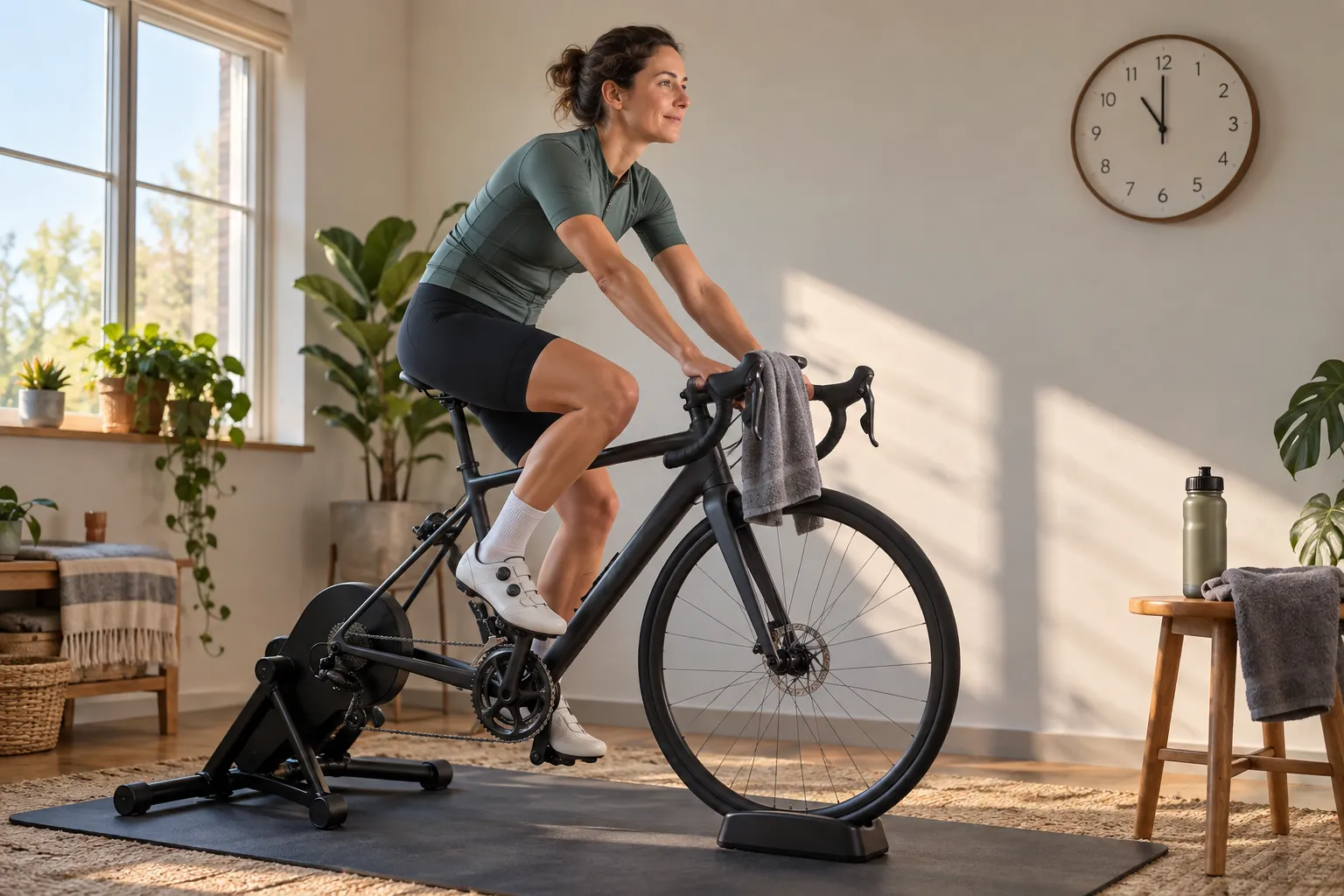
First define “Zone 2”
Cyclists use several zone systems. In a three-zone research model, low intensity sits below the first lactate or ventilatory threshold. In five- or seven-zone power and heart-rate systems, a label called Zone 2 may cover a somewhat different range. A watch’s default zones are not automatically your physiology.
For a beginner or rider without tested thresholds, use behaviour as a guardrail:
- breathing is controlled;
- complete sentences are possible;
- pressure on the pedals feels light to moderate;
- cadence and posture remain relaxed;
- the final 15 minutes do not become a race against the average.
Heart rate can drift with heat, dehydration, caffeine, fatigue, and indoor cooling. Power can be wrong when FTP is stale. If numbers and breathing disagree strongly, investigate rather than forcing the target.
What one easy hour can do
Add aerobic volume you can repeat
Endurance adaptation depends on repeated training over time. An easy hour is often easier to absorb than another interval session, which makes it a practical way to add volume around work, sleep, and family demands.
Support general health
The WHO recommends 150–300 minutes of moderate-intensity aerobic activity per week for adults, or 75–150 minutes of vigorous activity, or an equivalent combination. One ride is not the whole recommendation, but an hour is not “nothing” because it lacks intervals.
Rehearse low-cost skills
An easy ride gives space to practise relaxed shoulders, smooth shifting, drinking, cadence changes, and a stable position. Indoors, it is also a useful test of cooling and contact-point comfort before harder sessions.
Preserve consistency during busy weeks
A session you can start and finish reliably can protect the habit when a complex workout feels impossible. The guide to fitting cycling around work and family helps reserve a realistic floor without pretending every week is ideal.
What one easy hour cannot promise
It cannot guarantee a higher FTP, compensate for chronic sleep loss, replace all high-intensity work, or make a poor plan coherent. Training response depends on current fitness, total volume, intensity distribution, recovery, and the outcome you care about.
A 2026 randomized study compared three weekly high-intensity sessions with the same intervals plus four additional hours of moderate cycling in 19 moderately trained cyclists and triathletes over six weeks. Both groups improved time-trial performance, and the extra moderate volume did not produce a statistically detectable additional improvement in the measured outcomes.
That result is useful, but narrow. It does not prove easy riding is worthless, nor does it establish the best plan for beginners, health, long events, lower-intensity weeks, or a full season. It does show why “more Zone 2 always improves performance” is too strong.
Keep, shorten, replace, or rest
| Your situation | Best use of the hour |
|---|---|
| You recover well and have harder work elsewhere in the week | Keep it genuinely easy |
| You are building consistency from a low base | Ride 30–60 easy minutes and progress gradually |
| Sleep is poor and legs feel persistently heavy | Shorten or rest |
| This is your only session before a performance goal | Use the session your plan prioritises; do not improvise every week |
| Easy rides repeatedly become threshold efforts | Lower resistance, choose flatter terrain, or cap duration |
| Pain, illness, or unusual fatigue is present | Rest and resolve the cause rather than collecting minutes |
The decision is not “Zone 2 or intensity forever.” A balanced week can contain easy endurance, one or two focused harder sessions, skill practice, strength work, and real rest. The exact mix changes with experience and goals.
A simple time-crunched week
For a healthy improving rider who already tolerates three rides, a practical pattern might be:
- One focused session: structured intervals appropriate to the goal.
- One easy 45- to 60-minute ride: conversational throughout.
- One longer flexible ride: mostly easy, with hills or pace controlled rather than accidental racing.
This is an example, not a prescription. Start with the beginner plan without a power meter if three rides are not yet routine. Use how many days a beginner should ride to set frequency before optimising zones.
Judge the session by its consequences
The next morning, ask:
- Did the ride stay easy without repeated surges?
- Do I feel normal rather than depleted?
- Can I complete the next priority session with good form?
- Is weekly consistency improving?
- Am I enjoying enough of the plan to continue it?
If yes, the hour is doing useful work even when no platform awards a dramatic score. If no, reduce duration, improve cooling and fuelling, or take a cycling recovery week instead of defending the calendar.
Your next step
Keep one easy hour this week and record only three things: whether you could speak comfortably, whether effort drifted upward, and how you felt the next day. Use those observations to keep, shorten, or remove the session. A useful easy ride should make the week more repeatable.
Sources and further reading
- WHO guidelines on physical activity and sedentary behaviour
- Moran-MacDonald et al. 2026: polarized versus high-intensity training in moderately trained cyclists
- Neal et al. 2013: polarized versus threshold training in trained cyclists
- r/cycling reader context: whether a one-hour easy ride is useful for a time-crunched parent — used as an editorial demand signal; anecdotes were not treated as training evidence.