How to walk safely in road-cycling cleats
Walk short distances in exposed road cleats with better control, protect the cleats, and choose a recessed system when regular walking matters.
 Field guide / how-to-walk-safely-in-road-cycling-cleats
Before you buy
Check the starter kit first
Print the one-page buying brief for helmet, lights, water, phone, and repair compatibility before comparing upgrades.
You can walk a short distance in three-bolt road-cycling shoes, but treat it as careful equipment handling rather than normal walking. Take small steps, keep your weight controlled over the heel and available rubber contact points, avoid slick or uneven surfaces, and use compatible cleat covers when they genuinely improve grip. For frequent café stops, commuting, stairs, or train platforms, recessed two-bolt shoes are usually the better system.
The short answer: slow down before you step off the bike, scan the surface, shorten your stride, and do not hurry in exposed road cleats. Covers protect cleats and may add traction, but they do not make a stiff road shoe behave like a trainer. Remove the shoes or carry walkable footwear when the route demands more than a brief, dry, level walk.
Why road shoes feel awkward on foot
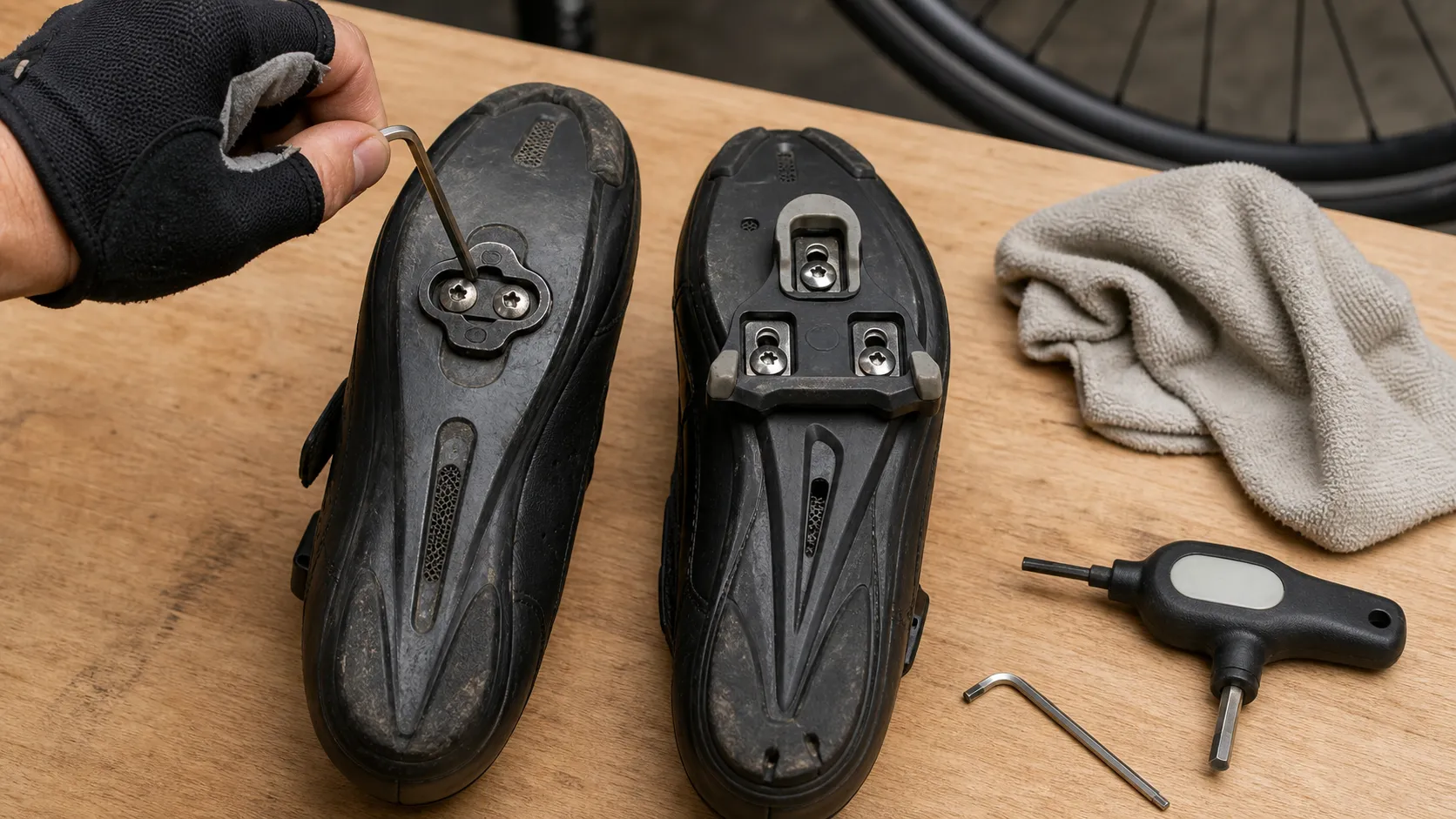
Three-bolt road systems place a broad cleat under a stiff sole. That platform can feel stable on the pedal, but off the bike it raises part of the forefoot, limits normal foot flexion, and offers less continuous rubber contact than a walking shoe or recessed two-bolt cycling shoe.
A current r/cycling discussion asked how riders handle walking in road cleats. The underlying decision is more useful than anyone’s personal tolerance: how much walking does your normal ride require, and on what surfaces?
Use a controlled short-step technique
Before dismounting, choose a flat place away from traffic and unclip early. Once standing:
- Look at the next few metres rather than only at your feet.
- Take short, deliberate steps.
- Keep your torso upright and avoid pushing hard off the exposed cleat.
- Place the foot gently so the heel and designed walking contacts share the load where possible.
- Keep one hand on the bicycle or handrail when that improves stability without creating a trip hazard.
- Turn with several small steps instead of pivoting sharply on one cleat.
Do not run to catch a train, jump a kerb, or descend stairs normally in road cleats. If urgency appears, stop and remove the shoes.
Treat surfaces differently
Lower-risk conditions
A few dry, level metres of rough pavement or firm ground can be manageable when walked slowly. Watch for gaps that could catch a cleat or stones that could damage the engagement surfaces.
Higher-risk conditions
Use exceptional caution—or remove the shoes—on:
- wet tile, polished concrete, marble, or timber;
- painted crossings and smooth metal covers;
- stairs, ramps, and steep driveways;
- loose gravel where the cleat can roll over stones;
- mud that can pack into engagement surfaces;
- grates, gaps, and escalators;
- floors where a hard cleat could mark or scratch the surface.
Weather changes the route. A café entrance that was easy when dry can be the most slippery part of a wet ride.
What cleat covers can and cannot do
A cover made for the exact cleat can:
- reduce direct wear on engagement surfaces;
- keep some dirt away from the cleat;
- add rubber contact and improve grip on some surfaces;
- make a brief stop less awkward.
It cannot restore normal ankle motion, soften a rigid sole, guarantee traction, or make an incompatible or worn cleat safe. A loose cover can become its own trip hazard. Install and remove it as its maker directs, and store dirty covers away from food and spare inner tubes.
Never clip into the pedal with a walking cover still installed unless the system explicitly allows it.
Inspect before clipping back in
After walking, turn the shoe over and check:
- mud, gravel, or debris in the cleat;
- cracks, missing pieces, or severe edge wear;
- loose or displaced mounting bolts;
- a shifted cleat outline;
- covers or foreign material still attached;
- engagement and release that feel different from normal.
Shimano’s SPD-SL user guidance tells riders to monitor increased play caused by cleat wear and to practise engagement and release before riding. Use the manual for your pedal family; wear indicators and replacement criteria differ.
If clipping or release is uncertain, do not discover the answer in traffic. Clean and test while stationary with support, or continue in normal shoes.
Choose the system around the whole ride
Three-bolt road shoes make sense when riding performance matters and walking is limited to a doorway or brief stop. Recessed two-bolt shoes usually suit:
- commuting with stations or office corridors;
- touring and sightseeing;
- frequent café or shop stops;
- mixed-surface rides with hike-a-bike sections;
- beginners who value simple off-bike movement;
- events with long transitions away from the bicycle.
Flat pedals remain a valid road-bike choice too. The tradeoff is not “serious cyclist versus beginner”; it is pedal feel, retention, shoe choice, and off-bike practicality. Compare the options in flat pedals versus SPD versus SPD-SL.
Pack for predictable walking
If the route includes a ferry, museum, long lunch, mechanical bailout, or train connection, plan footwear before leaving:
- choose recessed shoes from the start;
- pack light sandals or compact shoes;
- arrange secure shoe storage on the bike;
- carry exact cleat covers for short transitions;
- know where you can safely remove road shoes.
Walking in socks is a last resort only on a surface you have checked for glass, metal, heat, and sharp debris. Protecting a cleat is not worth injuring a foot.
Your next step
Rehearse a stop at home: unclip, walk across dry pavement, fit your cleat covers, remove them, inspect both cleats, and clip in again with support. If your normal rides require more walking than that, choose recessed two-bolt shoes or flat pedals before spending more on a road-only setup.
Sources and further reading
- Shimano SPD-SL pedal user manual: engagement, release, and cleat-wear checks
- Shimano SPD-SL shoe and cleat service instructions
- r/cycling reader context: handling off-bike walking in road cleats — used as an editorial demand signal; individual preferences were not treated as safety evidence.