How should you lock a road bike during a ride stop?
Plan café, shop, or beach stops with a road bike by choosing secure parking, locking the frame and wheels, and removing easy-to-steal accessories.
 Field guide / how-to-lock-road-bike-during-ride-stop
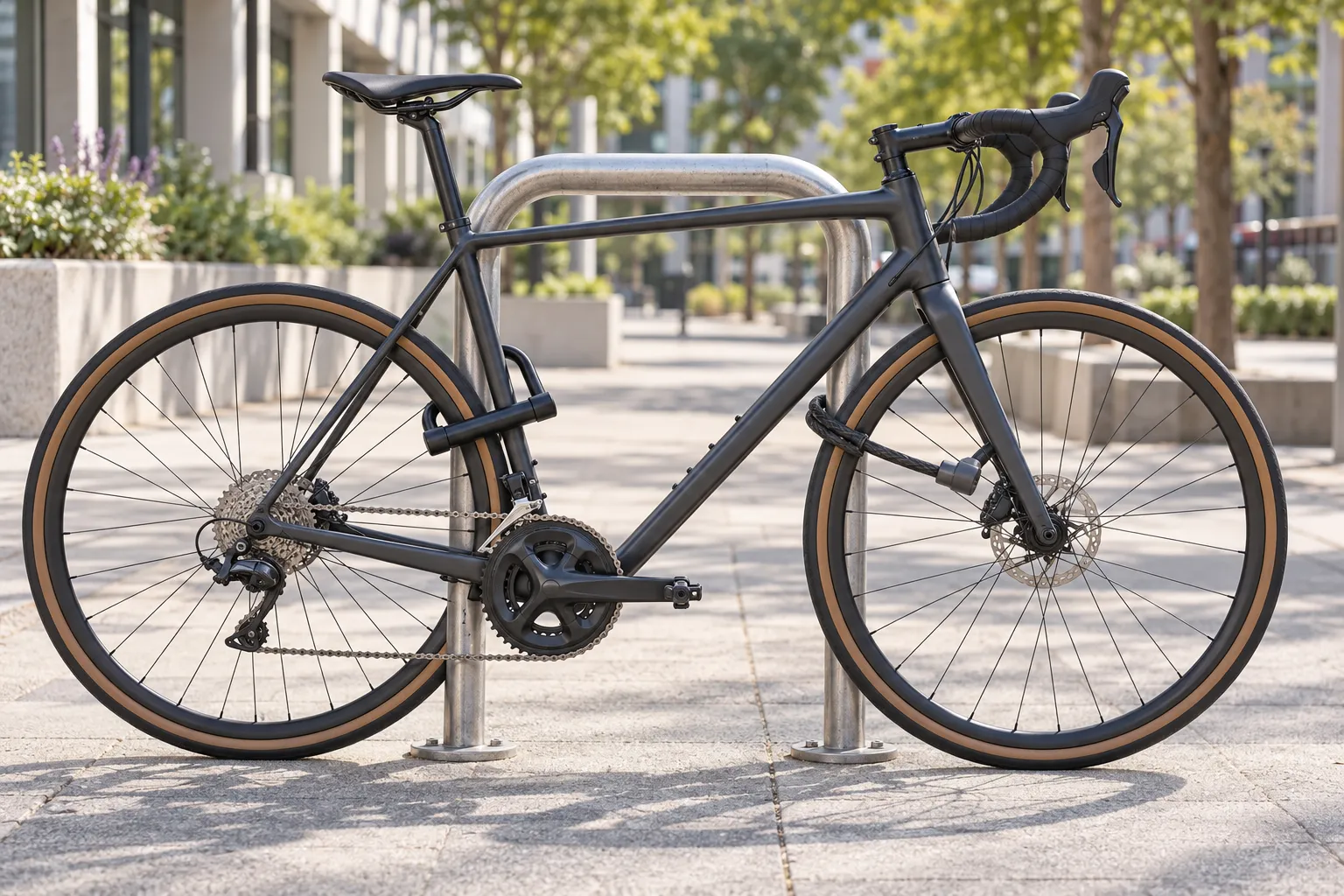
Lock a road bike by securing the frame and both wheels to a substantial immovable stand, using a quality primary lock and preferably a different secondary lock. Keep the lock tight to reduce tool space, remove lights and computers, and choose a busy, visible rack. For an expensive road bike, the safest stop is still one where the bike remains with you or under agreed supervision.
The short answer: decide how you will protect the bike before choosing the destination. A tiny café lock is only a brief delay against opportunistic handling; it is not suitable for leaving a valuable bike outside while you disappear into a shop, beach, or event.
Match the stop to the bike and lock
Ask three questions:
- How valuable and recognisable is the bike? A high-end road bike can attract targeted theft.
- How long will it be out of your control? “Just two minutes” easily becomes longer.
- What can you carry without ruining the ride? A strong lock is heavier than a pocket cable, but weight is not a security flaw.
For a quick water refill where the bike stays in sight, a compact secondary restraint may prevent someone simply riding away. For shopping, swimming, work, or any stop where the bike disappears from view, carry proper security or use a less theft-sensitive bike. Do not pretend one light cable serves both jobs.
Choose the parking point first
Prefer a recognised cycle stand in a busy, well-lit place with natural surveillance or CCTV. Check the stand before committing:
- it should be anchored firmly at both ends;
- the bike must not be liftable over it;
- no bolt, sign, or rail section should be easily removable;
- the lock should not rest on the ground, where it is easier to attack;
- the bike should not block pedestrians, wheelchair access, doors, or emergency routes.
Avoid thin railings, wire fences, wooden posts, scaffolding joints, and signposts that can be unbolted or lifted over. A superb lock attached to a weak object protects the weak object, not the bike.
Lock the frame and both wheels
A practical two-lock method is:
- Place the bike close to the stand with minimal empty space.
- Pass the strongest lock through the frame and a wheel, then around the stand.
- Use a second lock of a different type to secure the other wheel and frame to the stand.
- Position keyways for access without leaving them facing upward into rain or debris.
- Tug the stand and both locks before walking away.
With quick-release wheels, securing only the frame leaves valuable wheels exposed. Securing only a wheel can leave the rest of the bike exposed. Locking skewers or nuts can reduce opportunistic component theft, but they do not replace attaching the frame to an immovable object.
Two different lock types can require different tools and add time. Choose products independently tested to a level appropriate for the value and location; marketing words such as “hardened” or “cut resistant” are not an independent rating.
Remove what takes seconds to steal
Take these with you:
- bike computer and out-front computer if its mount releases easily;
- front and rear clip-on lights;
- saddle bag if it contains keys, wallet, tools, or electronics;
- bottles you do not want to lose;
- removable battery on an applicable e-bike.
Record the frame number, serialised components, distinguishing marks, and clear photos now. Registration does not stop a theft, but it can help prove ownership and identify a recovered bike. Keep purchase documents and maintenance receipts somewhere other than the saddle bag.
Make café stops a group procedure
On a group ride, agree before anyone orders:
- where the bikes will be placed;
- whether venue staff permit bikes in a courtyard or secure area;
- who remains with the bikes while others enter;
- when the final rider hands over supervision;
- whether everyone has actually locked their own bike.
“Someone was watching them” fails when each rider assumes it was somebody else. Name the person, then swap once the next person is physically present.
Treat tracking as recovery support, not a lock
A hidden tracker may help locate a missing bike, but it does not physically prevent theft, guarantee a usable location, or make personal recovery safe. Use tracking only as one layer alongside locks, registration, photos, and suitable insurance. If the bike disappears, report it and share the location with police rather than confronting a suspected thief.
Read whether an AirTag is enough to protect a bike before relying on one.
Plan the destination before the route
Before a long ride to a beach, café, station, or event, contact the venue or inspect public information for cycle parking. If secure parking does not exist, change one variable:
- choose a destination with proper racks;
- take a lower-value utility bike;
- travel with a companion and alternate supervision;
- carry stronger locks;
- shorten the stop or keep the bike with you.
This is more effective than arriving tired and improvising with a helmet strap or decorative fence.
Your next step
Practise your complete lock-up at home. Time it, confirm that both wheels and the frame are secured, and make sure the locks fit the stand style you expect. Then add the lock weight and key location to your route plan.
If theft cover matters, compare the exact security conditions with the seven details to check in bike insurance.
Sources and further reading
- Police.uk bicycle theft prevention guidance
- r/cycling beginner discussion about locking a bike during a beach ride — used as an editorial demand signal; the thread’s product suggestions were not treated as verified security ratings.