How to choose your second road bike without repeating your first
Turn real riding evidence into a second-road-bike brief using fit, route, gearing, tyre clearance, service, and total cost—not upgrade pressure.
 Field guide / how-to-choose-second-road-bike
Before you view or pay
Check fit, condition, and starter gear first
Use the buying checklist to choose the right path: used-bike viewing, first-bike fit and type, hidden repair costs, or starter gear.
Your second road bike should solve a problem you can now describe from riding, not merely sit one tier above the first. If you cannot name what must change—position, gearing, tyre clearance, carrying capacity, braking, serviceability, or event use—keep riding and save the money.
The short answer: audit the first bike, write three required improvements, preserve everything that already works, and test candidates against the same route and contact-point measurements. Buy a complementary bike only when you want a genuinely different job; otherwise replace the first bike with a clearer version of it.
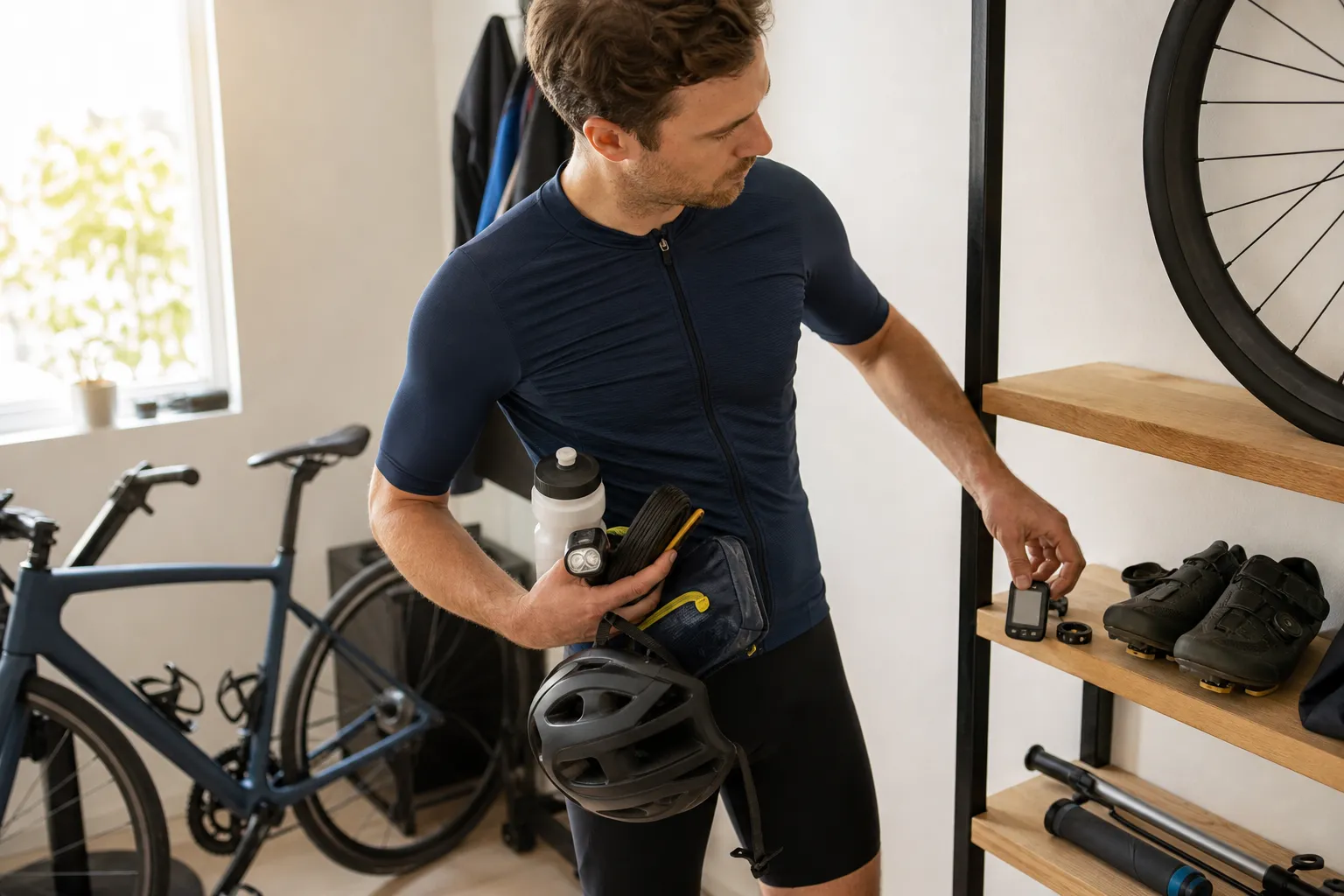
Begin with the evidence your first bike created
A highly discussed recent Reddit thread asking what riders chose as a second, more serious road bike produced hundreds of model stories. The engagement shows strong interest, but other riders’ purchase histories cannot identify what your bike should do.
Review the last 20–30 rides and write down:
- typical and longest duration;
- pavement quality and any gravel;
- climbing and the lowest gear you actually use;
- solo, group, commute, event, or travel use;
- recurring discomfort or control problems;
- punctures, repairs, and parts availability;
- luggage, mudguard, and tyre needs; and
- the upgrades you considered but did not make.
Separate a limitation of the bicycle from a limitation of setup, maintenance, skill, fitness, route, or expectations. A dragging brake can make a good bike feel slow. A poor fit does not become good because the replacement frame is carbon.
Decide whether this is a replacement or a complement
A replacement does the same main job better. It should preserve the strengths of the first bike while resolving clear constraints.
A complement does a different job: perhaps a durable winter bike beside a race bike, a wide-tyre all-road bike beside a fast road bike, or a utility bike beside an event bike.
If both bikes would use the same routes, same position, same tyres, same gearing, and same weather, the second may be duplication rather than expansion. That can still be enjoyable, but call it what it is before spending.
Ask one practical question: which ride will I do on the new bike that I avoid, compromise, or cannot safely do now?
Write three required changes
Limit the brief to three outcomes. Examples:
- Lower climbing gear for local gradients.
- Clearance for a manufacturer-approved wider tyre and mudguard.
- A slightly higher front end without reducing safe handling or brake access.
Or:
- More aerodynamic position for racing.
- Stiffer, deeper wheels appropriate to wind and rider handling.
- Electronic shifting because precise low-force operation solves a real control need.
“Carbon,” “105,” “aero,” and “faster” are features or aspirations, not outcomes. Translate each into the ride problem it solves and the trade it introduces.
Preserve the fit coordinates that work
Measure the current bike before selling or stripping it:
- saddle height and setback using repeatable reference points;
- saddle model, width, and tilt;
- crank length;
- horizontal and vertical saddle-to-handlebar relationship;
- handlebar width and hood position;
- brake-lever reach; and
- cleat, shoe, and pedal system.
These are not instructions to duplicate every millimetre on a different bike. They are a baseline that prevents a salesperson or geometry label from erasing what you learned.
Compare frame stack and reach, but also account for headset top cover, spacers, stem length and angle, handlebar reach, and hood position. Read how to compare road-bike geometry charts before declaring two nominal sizes equivalent.
Choose the frame around difficult-to-change needs
Prioritise attributes that are expensive, constrained, or impossible to change later:
- correct size and workable position;
- tyre and mudguard clearance;
- brake and axle architecture;
- mount points;
- cable routing and cockpit adjustability;
- compatible replacement parts;
- manufacturer support and warranty; and
- handling appropriate to your use.
Groupsets, wheels, tyres, saddles, and bars may be changeable, but the complete cost can be substantial. Do not buy the wrong foundation because one component tier looks impressive on a product page.
Compare gearing with tooth counts
Record your current smallest chainring and largest cassette sprocket. Note the roads where you run out of easier gears or, less commonly, faster gears.
Compare the actual easiest and hardest ratios on candidates. The number of rear speeds does not tell you whether the range suits your hills. Confirm derailleur capacity and manufacturer-supported cassette options before assuming you can change it cheaply later.
If the current gearing works everywhere, preserve that capability. A racier bike with harder gearing can feel like an upgrade in the shop and a downgrade on the first steep ride.
Spend on the complete transition
The new bicycle price is only one line. Add:
- pedals and compatible shoes;
- fit changes such as stem, bar, or saddle;
- tyres appropriate to your routes;
- bottle cages, lights, and repair spares;
- insurance or secure storage where relevant;
- shipping, assembly, and first service;
- a cassette or freehub changes for an indoor trainer;
- replacement proprietary parts; and
- immediate work on a used bike.
Then subtract only the realistic value of parts you can reuse or the first bike you genuinely intend to sell. Do not finance the plan with an optimistic resale number.
Use the complete first-bike budget as a template; the hidden-cost categories still apply to a second bike.
Test against a fixed scorecard
Test no more than three serious candidates. Score each from 0 to 2:
| Criterion | 0 | 1 | 2 |
|---|---|---|---|
| Solves the three required changes | No | Partly | Clearly |
| Preserves known fit strengths | Unknown | Adjustable | Confirmed |
| Gearing suits real routes | Worse | Equal | Better where needed |
| Tyre and surface capability | Restrictive | Adequate | Adds useful options |
| Service and parts | Unclear | Available | Straightforward locally |
| Complete cost | Over budget | At ceiling | Leaves contingency |
Use the same shoes, pedals, route type, and basic saddle adjustment where possible. A five-minute car-park ride cannot prove long-distance comfort, but it can reveal brake-access, size, steering, and obvious position problems.
Upgrade the first bike when the frame still fits the job
Keep or improve the current bike when:
- it fits well;
- the structure is sound;
- tyre clearance and gearing suit the route;
- replacement parts remain available;
- the problem is worn tyres, poor maintenance, or one contact point; or
- the desired gain is too vague to test.
Service plus excellent tyres may change the ride more than a fashionable frame. Our guide to what to upgrade first helps separate repair, fit, comfort, and performance spending.
Know when not to buy yet
Wait when you are responding to a sale deadline, social comparison, one unusually bad ride, or a desire to skip skill development. Also wait when pain is unresolved. A second bicycle can make diagnosis harder by changing several variables at once.
A useful pause is not anti-upgrade. It protects the eventual purchase from being an expensive guess.
Your next step
Write a one-page second-bike brief with three required changes, three strengths to preserve, the complete budget, and one ride the new bike must unlock. Put it through the road-bike buying checklist before looking at model tiers or sale prices.
Sources and further reading
- Trek: model geometry tables including stack and reach
- Shimano: current component specifications and compatibility information
- r/cycling reader context: the high-interest question of what a second road bike should be
Reddit was used to identify the buying question. Model lists and owner anecdotes were not treated as comparative product evidence.