Do you need to be fast enough to deserve an expensive road bike?
Fitness is not an entry requirement for a nice bicycle. Use affordability, fit, intended riding, serviceability, and honest priorities to decide instead.
 Field guide / do-you-need-to-be-fast-for-expensive-road-bike
Before you view or pay
Check fit, condition, and starter gear first
Use the buying checklist to choose the right path: used-bike viewing, first-bike fit and type, hidden repair costs, or starter gear.
You do not have to reach a particular FTP, average speed, distance, body shape, or experience level to “earn” an expensive road bike. A bicycle is equipment, transport, recreation, and sometimes simply a beautiful object. Fitness is not a purchase permit.
The short answer: buy the bike if it fits, suits the riding you actually want to do, can be afforded without displacing important needs, and has an ownership burden you accept. Do not use FTP as a threshold. Do use a complete budget and a test ride to separate genuine value from status anxiety.
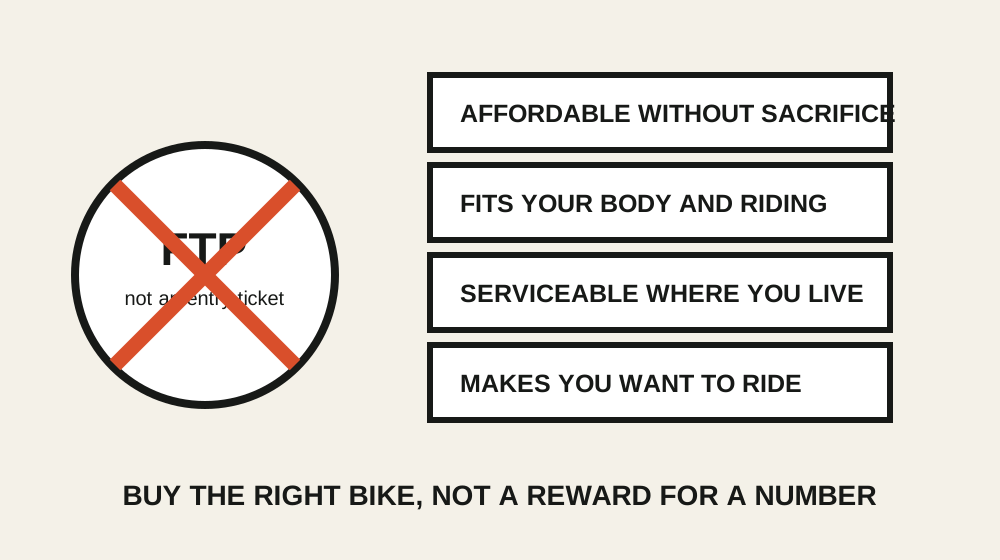
FTP does not answer the buying question
Functional threshold power is an estimate used to set training intensity. It does not tell you:
- whether a bike fits;
- whether you enjoy endurance rides, racing, commuting, or café loops;
- whether integrated parts can be adjusted for you;
- whether local shops can service the components;
- whether you can afford the bike and ongoing costs;
- whether the new bike solves a real limitation.
Even as a performance measure, raw watts are incomplete without rider weight, test method, environment, and measurement accuracy. Using one number as a social permission slip adds pressure without improving the decision.
Separate “I want it” from “I need it”
Both can be valid. Say which one you are funding.
If the purchase is performance-led, name the constraint: gearing is too hard, fit cannot be corrected, tyre clearance is insufficient, brakes do not suit the route, or the bike cannot carry what you need. Compare bikes against that requirement.
If the purchase is joy-led, be equally honest: you like the design, feel, engineering, or ritual of riding it. You do not need to invent a watt-saving justification. The decision then rests mainly on affordability, fit, and whether ownership will be enjoyable.
The keep the current bike or buy a new one guide helps distinguish repair, targeted upgrade, and replacement.
Build the complete budget before the fantasy build
The sticker price is only the beginning. Add:
- pedals, bottle cages, computer mount, and saddle if not included;
- shoes or cleats if the pedal system changes;
- insurance and secure storage;
- tubeless setup or different tyres;
- fit changes such as stem, bar, or seatpost;
- proprietary spacers and computer mounts;
- servicing, bearings, brake parts, chains, and cassettes;
- transport case or roof-rack adapters if relevant.
Do not finance a recreational upgrade by removing the emergency buffer that lets you repair it. A less expensive bike with room for fit changes, tyres, maintenance, and trips can create more riding than a flagship bike you are afraid to use.
Use the complete first-road-bike budget even if this is not your first bike. The categories still apply.
Check whether “high end” moves away from your needs
Higher price often buys specialisation as much as general quality. A race bike may be lighter, stiffer, lower at the front, more integrated, and more aerodynamic. Those traits are not automatically better for long relaxed rides, luggage, rough roads, frequent fit changes, or home maintenance.
Before paying, compare:
- stack, reach, and achievable contact-point position;
- tyre clearance and approved pressure system;
- lowest gear for your actual climbs;
- replaceable versus proprietary cockpit and seatpost parts;
- cable and hose routing service cost;
- local availability of hangers, bearings, and small hardware;
- warranty path and crash-replacement terms;
- total system-weight limit.
A separate stem and handlebar can be a premium feature for your life even if it is less aerodynamic. The integrated-cockpit sizing guide explains why fit mistakes become expensive on one-piece systems.
Use a two-ride test if possible
A short exciting ride can reward stiffness, fresh tyres, and novelty. Add a second test that resembles normal use.
On the first ride, check size, braking, shifting, toe overlap, control reach, and basic comfort. On the second, ride rougher surfaces, climb in the easiest gear, hold the hoods for longer, and practise the low-speed turns your route requires.
Do not compare an unmaintained current bike with a perfectly prepared showroom bike and conclude that the frame price caused every difference. Correct tyre pressure, fresh contact points, and functioning bearings matter.
A five-question buying decision
Buy when you can answer yes to these:
- Can I pay for the complete setup and first year of ownership comfortably?
- Does the bike fit now, with an affordable path for small changes?
- Does it match my real surfaces, gradients, distances, and maintenance habits?
- Can I obtain service and replacement parts where I live?
- Would I still want it if nobody saw the logo or knew the price?
The fifth question does not forbid an emotional purchase. It clarifies whether you love the object or the imagined approval.
You are allowed to remain slow
A nicer bike may make riding more enjoyable. It may also make little difference to speed. Neither outcome creates an obligation to race, post numbers, join the fastest group, or explain yourself.
The respectful standard in a group is predictable handling, communication, and following the ride’s expectations—not matching the retail price of your equipment to your power output. If anyone tries to gatekeep enjoyment by FTP, that is a culture problem, not a bicycle specification.
Your next step
Write two sentences: “This bike solves…” and “I want this bike because…”. Then complete the road-bike buying checklist with the full cost, fit, service, and return details. If the numbers work and both sentences are honest, fitness does not need a vote.
Sources and further reading
- r/cycling reader context: anxiety about a high-end bike and a modest FTP — used as a current buying and belonging signal; individual performance and product claims were not treated as evidence.