How to cycle in the rain with prescription glasses
Keep useful vision in wet weather with clean compatible lenses, a brim or visor, slower riding, and a clear stop-and-bailout rule.
 Field guide / cycling-in-rain-with-prescription-glasses
The reliable solution is not one miracle coating. Start with clean, correctly fitted prescription lenses, shield them from direct rain with a small brim or compatible visor, ride more slowly, and stop when visibility falls below what the road requires. Contact lenses or prescription sports eyewear may help some riders, but that decision belongs with an eye-care professional.
The short answer: keep the prescription you need, reduce the amount of water reaching the lens, use only products approved for that exact lens and coating, increase following and braking distance, and carry a dry cloth for use while stopped. If you are guessing where potholes or road edges are, the ride is over until you can see again.
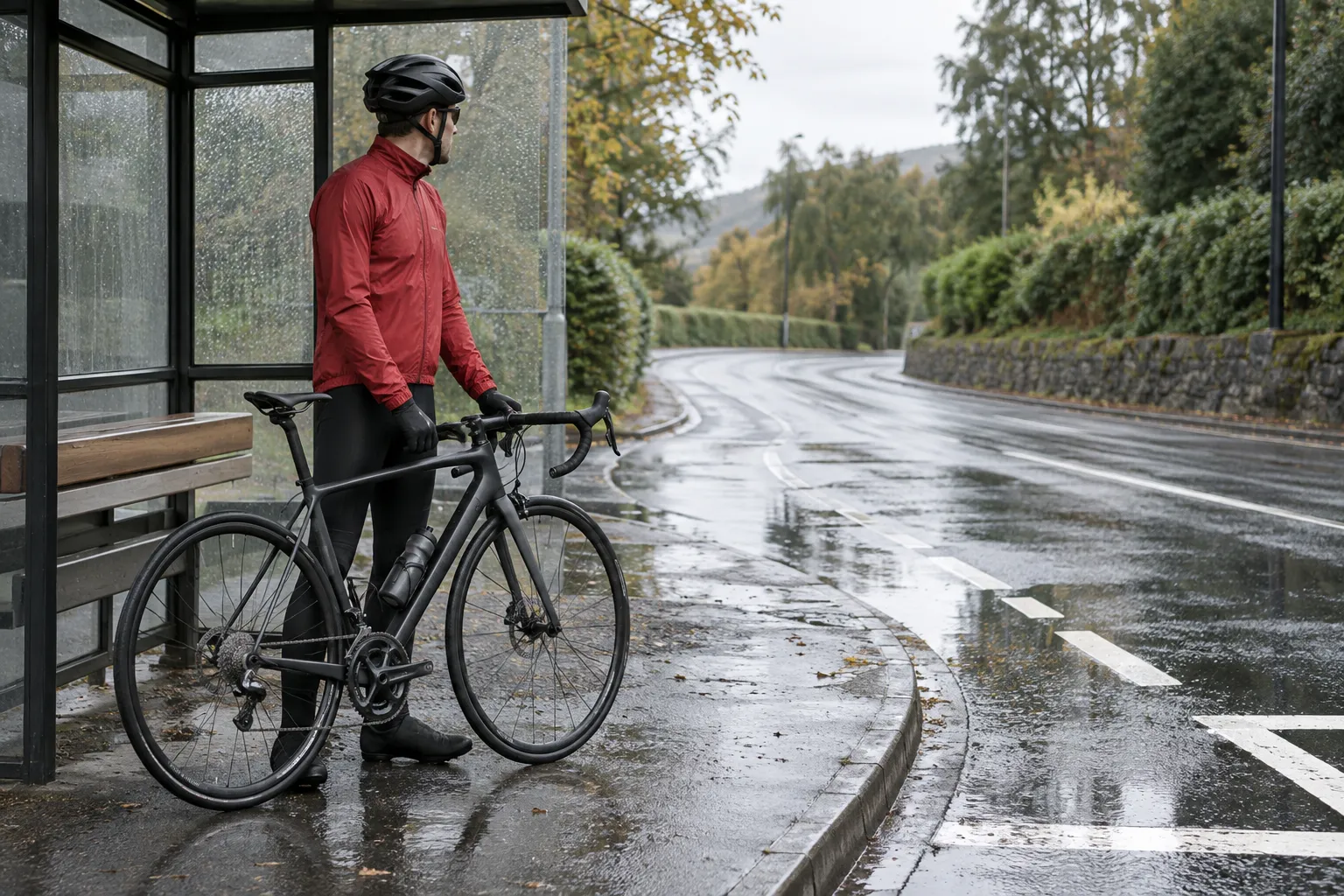
Solve four different vision problems
“My glasses are useless in rain” can describe four separate problems:
- Droplets on the outside: direct rain and wheel spray scatter light and hide surface detail.
- Fog on the inside: warm, moist air condenses when ventilation is poor.
- Smears and glare: skin oil, road film, salt, and dirty wiping spread across the lens, especially under headlights.
- Poor fit: glasses slide, touch eyelashes, or sit where a helmet, cap, or hood disturbs them.
Treat the problem you actually have. An anti-fog product will not stop raindrops landing on the outer surface, and a cap will not clean an oily lens.
Begin with clean, compatible lenses
Wash or clean the lenses according to the lens maker or optician’s instructions before the ride. Use a clean microfiber cloth rather than a glove, jersey hem, or gritty roadside tissue. Dirt trapped in fabric can scratch a coating and makes water spread into a milky film.
Modern hydrophobic lens coatings are designed to make water bead and release more easily. ZEISS describes water-repellent top coatings and dedicated anti-fog products made for compatible spectacle lenses. That is not permission to apply car-windscreen treatment, household wax, detergent, or an unknown spray. These may damage anti-reflective, polarised, mirror, photochromic, or hard coatings.
Ask the optician who supplied the lenses:
- Which cleaner and anti-fog product is approved?
- Does the lens already have a water-repellent top coat?
- Can the coating be renewed, or does poor beading indicate wear?
- Is the frame stable enough for a helmeted riding position?
Carry a clean dry cloth in a sealed bag. Only use it after stopping somewhere safe.
Keep direct rain off the lens
A traditional cycling cap with a short peak can intercept rain without enclosing the face. Wear it with the peak down, confirm that the helmet still sits level, and make sure the cap does not interfere with retention straps or visibility.
A helmet designed for a compatible detachable visor may also help. Use only the maker’s intended visor and attachment system; do not drill, glue, or cable-tie a shield to a helmet. Check peripheral vision, shoulder checks, and head movement before riding.
Avoid pulling a loose hood around the helmet if it restricts hearing, peripheral vision, or head rotation. A hood that catches wind can create a new control problem.
Reduce fog without exposing your eyes
Fog forms when warm moist air stays against a cooler lens. Improve airflow before adding chemicals:
- keep the jacket collar from sealing exhaled air upward;
- position a cap or visor so it blocks rain without closing the lens area;
- choose a frame that does not press the lens against the face;
- stop before wiping condensation rather than doing it one-handed;
- use only a lens-compatible anti-fog product and follow its timing and cleaning instructions.
Prescription inserts behind an outer sports lens can create two surfaces that fog. Test that arrangement on a short, low-traffic ride before relying on it for darkness or heavy rain.
Contact lenses are an option, not a universal answer
Some riders use contact lenses beneath clear cycling glasses, allowing the outer glasses to be removed or changed while retaining corrected vision. Contacts are medical devices, not a casual equipment hack. Suitability, hygiene, replacement schedule, dry-eye symptoms, and multifocal needs vary.
Ask an optometrist or ophthalmologist before changing correction. Even with contacts, use impact-rated cycling eyewear to protect against rain, grit, insects, and wind. Never borrow lenses or ride in a lens that is painful, displaced, contaminated, or causing sudden visual change.
Change the ride to match the view
Wet lenses are only one reduced-visibility factor. Rain also darkens potholes, increases glare, lengthens stopping, and makes painted lines, metal covers, leaves, and oily junctions less predictable.
When vision is usable but reduced:
- slow down before corners and descents;
- extend the gap to riders and vehicles;
- avoid sitting directly in another wheel’s spray;
- use lights appropriate to local law and conditions;
- choose a simpler, familiar route with safe shelter options;
- signal earlier and avoid abrupt line changes;
- keep both hands available for braking on uncertain surfaces.
Use the complete road-cycling rain guide for grip, braking, clothing, and route decisions.
Use a hard stop rule
Before leaving, decide what ends the ride. A practical rule is: stop if you cannot identify the surface and path far enough ahead to brake within the distance you can see.
Do not remove prescription glasses and “ride by feel.” Do not wipe while moving through traffic. Find a car park, covered entrance, café, station, or other place fully away from the traffic line. Avoid sheltering under a tree during a thunderstorm.
If the lens is cracked, a temple is loose, the prescription feels suddenly wrong, or vision remains blurred after cleaning, arrange professional help and another way home.
Your next step
Clean the glasses using their approved method, pack a dry cloth, and test a cap or compatible visor on a short familiar loop in light rain. Confirm that you can shoulder-check, read signs, identify surface hazards, and stop without touching the lenses while moving. If that test is not convincing, change the eyewear plan before the next wet ride.
Sources and further reading
- ZEISS: water-repellent spectacle-lens coatings
- ZEISS: lens-compatible anti-fog cleaning products
- r/cycling reader context: prescription glasses becoming difficult to use in rain
Reddit supplied the recurring visibility problem and range of attempted solutions. No commenter’s product recommendation or medical choice was treated as universal advice.