Can you convert a mountain bike into a road bike?
Decide whether tyres, contact points, gearing, or a second bicycle best solves a mountain-bike-to-road conversion without creating a costly compatibility project.
 Field guide / convert-mountain-bike-to-road-bike
Before you buy
Check the starter kit first
Print the one-page buying brief for helmet, lights, water, phone, and repair compatibility before comparing upgrades.
You can make a mountain bike quicker and quieter on paved roads, but turning it into the equivalent of a road-racing bike is usually poor value. Start with tyres, condition, fit, and riding position. A drop-bar conversion can trigger new brake levers, shifters, derailleurs, cables or hoses, handlebar, stem, and fit work while leaving the original frame geometry, suspension, weight, and gearing range.
The short answer: for commuting, fitness, and long paved rides, keep the flat bar and fit compatible low-tread tyres at sensible pressure. Add bar-end positions only when the maker permits them. If your goal is road racing, fast group riding, or a true drop-bar position, price a suitable used road or fitness bike before buying conversion parts.
Why this keeps looking easier than it is
A current r/bikewrench discussion about converting a mountain bike into a criterium-style road bike surfaced the usual mismatch between the visual idea and the mechanical job. Handlebars are obvious, but controls, cable pull, hydraulic systems, drivetrain indexing, reach, and frame handling decide whether the build works.
The right question is not “can parts be bolted on?” It is “what road problem am I solving, and what is the cheapest safe way to solve it?”
Choose the target first
| Target | Sensible first move |
|---|---|
| Quieter commute | Compatible smoother tyres and complete service |
| Longer paved fitness rides | Tyres, comfortable contact points, bottle capacity, and pacing |
| Occasional road event | Train on the current bike; confirm event rules and gearing |
| Fast road group | Compare expected pace, braking, gearing, hand positions, and bike fit |
| Criterium or road racing | Buy or borrow a suitable road bike rather than forcing a conversion |
A mountain bike can build excellent endurance. Use training for a long road ride on a mountain bike before assuming equipment is the limiter.
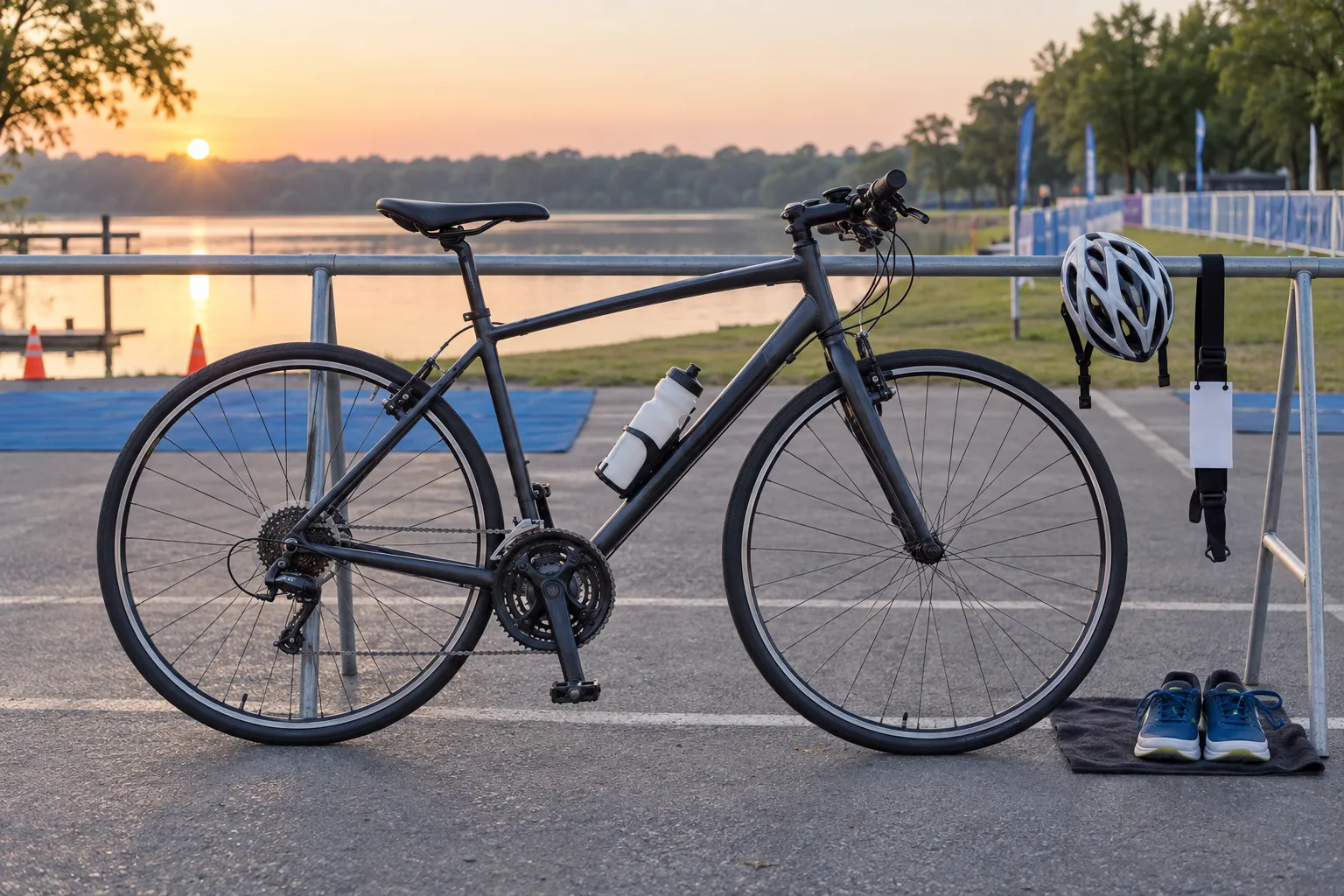
The high-value version: keep the flat bar
First make the bicycle mechanically sound. Check brakes, wheels, tyres, headset, drivetrain, suspension, and contact points. A dragging brake, dry chain, underinflated knobby tyre, or poorly adjusted hub can waste more effort than the handlebar shape.
For tyres:
- read the exact wheel, rim, and current tyre markings;
- stay within the frame, fork, and rim’s documented size range;
- preserve safe clearance for wheel flex, debris, and mudguards;
- use a tread and casing appropriate to the roads and load;
- set pressure from measured tyre width, system weight, surface, and maker limits.
Do not assume every wheel labelled 26, 27.5, 28, or 29 inches accepts every tyre using a similar name. Use the ISO/ETRTO bead-seat diameter in the tyre-size guide.
Locking out suspension can reduce bob on smooth roads only when the fork or shock is designed to be locked. It does not turn suspension geometry into road geometry, and some systems are not intended to be ridden locked over impacts.
Why drop bars expand the project
Flat-bar brake levers and shifters usually cannot be installed on drop bars. Integrated road brake/shift levers must match:
- the brake type and required actuation or hydraulic system;
- front and rear derailleur families and cable pull or electronic protocol;
- cassette speeds and indexing;
- chainring count and front shifting;
- cable or hose routing;
- handlebar clamp diameter and shape;
- stem clamp, steerer, spacer, and torque requirements.
Even components with the same speed count or brand name may not be compatible. Use the exact manufacturer’s compatibility chart and dealer manual for every model number.
Then fit changes. Drop controls place the hands forward and lower than a normal flat grip. A very short stem may not restore the intended handling or safe clamp requirements. Moving the saddle to compensate is not a cockpit fix; it changes support relative to the pedals.
Price the complete conversion
Include:
- handlebar, tape, and plugs;
- compatible brake/shift levers;
- derailleurs or brake calipers if required;
- cables, housing, hydraulic hose, fluid, fittings, and bleed labour;
- stem and fit work;
- tyres and tubes or tubeless parts;
- drivetrain wear parts;
- workshop labour and special tools;
- a contingency for seized, worn, or proprietary parts;
- the resale value of the unchanged bike.
Compare that number with a correctly sized used road bike, a flat-bar fitness bike, or keeping the mountain bike and adding a second bike. Use the road-bike buying checklist for the alternative, including immediate service cost.
When a conversion does make sense
A modest road adaptation is reasonable when the frame fits, the bike is sound, tyres are compatible, you value the upright control position, and the changes are reversible. It can also be a deliberate hobby project when learning and customisation—not financial efficiency—are the goal.
A full drop-bar conversion is more defensible when an experienced builder has already mapped every component, the resulting fit is known, replacement parts are available, and the project has value beyond getting a cheap road bike.
Walk away when braking compatibility is uncertain, the frame is the wrong size, the fork or wheels need major work, the parts budget approaches a complete suitable bicycle, or the desired event requires equipment the finished bike will not meet.
Your next step
Write one sentence describing the paved-road job. If flat bars are acceptable, service the bike and shortlist compatible road-suitable tyres. If drop bars or racing are essential, build the full parts-and-labour list before ordering anything and compare it with a ready-to-ride used road bike.
Sources and further reading
- Shimano technical documents and model-specific dealer manuals
- r/bikewrench reader context: a proposed mountain-bike-to-criterium-bike conversion — used as an editorial demand signal; replies were not treated as compatibility documentation.