Should you buy a used bike with flat tyres and no test ride?
Treat flat tyres as blocked evidence, not a small discount: inspect the cause, make the bike testable, price the uncertainty, and know when to walk away.
 Field guide / buy-used-bike-with-flat-tyres
Before you view or pay
Check fit, condition, and starter gear first
Use the buying checklist to choose the right path: used-bike viewing, first-bike fit and type, hidden repair costs, or starter gear.
A used bicycle with two flat tyres may need only tubes. It may also have damaged tyres, failed tubeless tape, bent rims, long-term storage damage, or problems the seller does not want exposed by a test ride. You cannot tell from the asking price or a clean frame.
The short answer: ask the seller to make the bicycle safely rideable before the viewing, or agree to meet at a shop for an inspection. If the tyres cannot be inflated and hold pressure long enough for static checks and a controlled ride, value the bicycle as an untested project. For a beginner who needs a dependable bike, that usually means pausing or walking away.
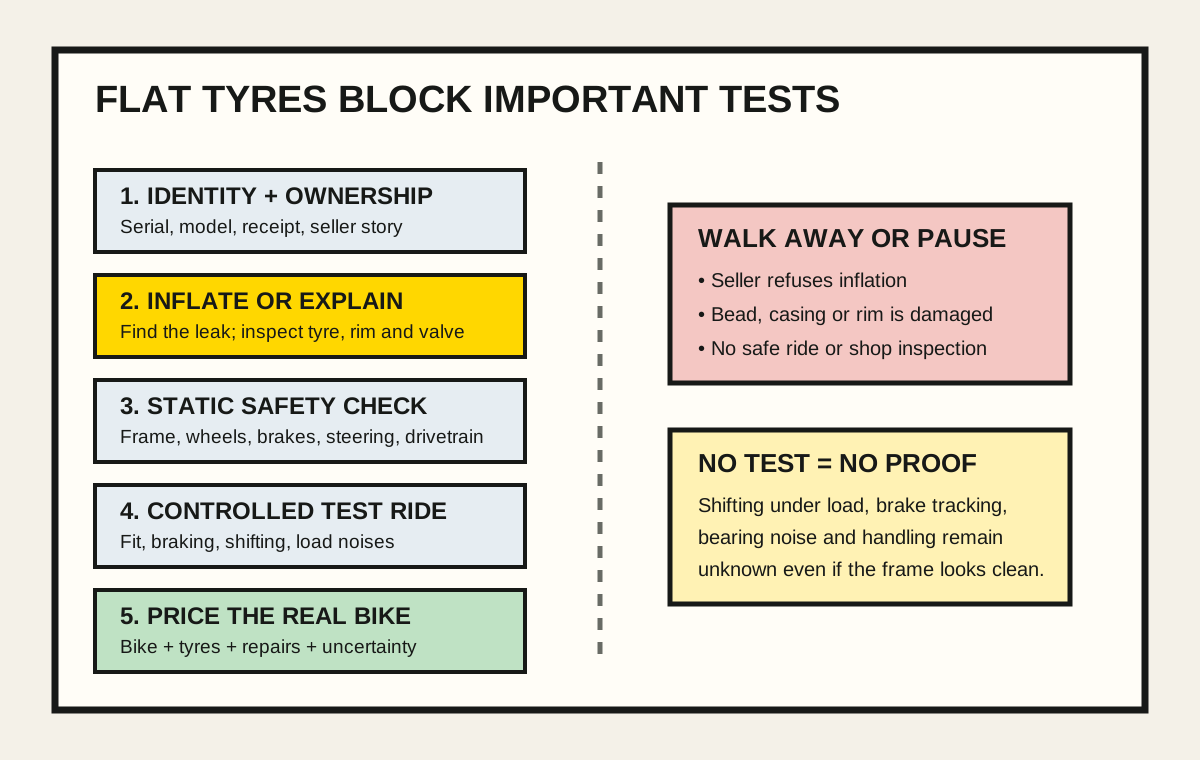
Ask why both tyres are flat before travelling
Request clear photographs of both tyre sidewalls, tread, valves, rims, serial number, drivetrain, and the complete bicycle. Ask when it was last ridden and how long it has stood flat.
The useful answers are specific: “both tubes lose air over several days,” “the tubeless sealant dried out,” or “the rear went flat after a puncture.” “It just needs air” is not evidence. If that were known, the seller could inflate it.
Also complete the ownership checks in how to avoid buying a stolen used bike. Flat tyres should not distract from a missing serial number, inconsistent story, or refusal to provide normal proof of ownership.
Make the viewing conditional on a testable bike
Before leaving home, send a simple condition:
I need both tyres to hold the tyre maker’s permitted pressure, both wheels to be secure, and the bike to be safe for a short test ride. If that is not possible, I would need a shop inspection before deciding.
Do not promise to buy if the seller fits new tubes. You still need to inspect the cause and the rest of the bicycle.
If the seller agrees that you may bring a pump, confirm the tyre and valve type first. Never inflate a visibly damaged casing, displaced bead, cracked rim, or unknown tubeless system to a guessed high pressure. Follow the limits on the tyre and rim and use a sensible starting pressure for that exact setup.
Inspect before adding air
Look around the full circumference of each tyre and rim. Stop for:
- exposed casing threads, a bulge, deep cut, severe cracking, or a deformed bead;
- a tyre sitting outside the rim or a tube trapped under the bead;
- a dent, crack, delamination, sharp edge, or displaced rim tape;
- a valve pulled sideways, loose at its base, or damaged;
- wet tubeless sealant around spoke holes, rim seams, or the valve;
- signs the bicycle stood on flat tyres long enough to crush or distort them.
Continental’s bicycle care guidance calls for replacing tyres with tears, bulges, bare casing, or significant degradation. The exact tyre maker’s instructions control the decision for the bicycle in front of you.
Inflate in stages. Check the bead witness line stays even around both sides. Wait while you inspect the frame and controls, then check pressure again. Fast loss means the bike is not ready for a test ride.
What a no-test purchase leaves unknown
A stationary check cannot reveal everything. Without a safe ride you cannot properly assess:
- whether the size and control reach work for you;
- braking under controlled load;
- gear changes across the cassette while pedalling;
- chain skip under moderate pressure;
- wheel, bearing, headset, bottom-bracket, or frame noise under load;
- steering alignment and whether the bicycle tracks predictably;
- whether a tyre rubs the frame when weighted;
- whether the freehub engages consistently.
You can still check frame condition, wheel security, steering play, brake-lever travel, crank play, chain wear, and basic shifting in a stand. Use the full used-road-bike test-ride checklist once the tyres hold.
Price the bicycle as it is, not as promised
Build a written repair allowance for two tyres, two tubes or a full tubeless refresh, rim tape, valves, labour, and any transport needed. Then add the larger unknowns that a ride would have tested: drivetrain, bearings, wheels, brakes, and fit.
A low asking price does not make that uncertainty disappear. Compare the total with a rideable alternative that has service history and can be tested. How to avoid a used bike becoming a project gives a more complete cost boundary.
Do not let an aftermarket groupset or desirable frame make basic evidence optional. A bicycle that cannot demonstrate safe rolling, braking, and shifting is not yet a functioning bicycle purchase.
Three reasonable deal structures
Seller repairs it first
The seller makes it safely rideable and you inspect it afterward. Ask what parts were fitted and keep the right to decline.
Independent shop inspection
Meet at a shop chosen by mutual agreement. Confirm the inspection scope and who pays before the appointment. The shop can identify whether the flat is a simple consumable issue or part of a larger wheel problem.
Project-bike price with no ride
This is suitable only when you intentionally want a project, can identify the frame and parts, can absorb hidden costs, and do not need the bicycle immediately. Assume every untested system may require work.
Cash changing hands in a car park with a promise that “it only needs air” is not a fourth inspection method.
Walk away when the evidence gets worse
Leave when the seller refuses reasonable photographs or inflation, rushes the payment, changes the story, will not allow a shop check, hides the serial, or asks you to ride unsafe tyres. Also leave when the frame size or intended use is wrong. Mechanical repairs cannot make the wrong bicycle become the right purchase.
The supply of used bicycles is larger than the opportunity in front of you. Missing one uncertain deal is cheaper than buying tyres, wheels, drivetrain parts, and a different frame.
Your next step
Send the testable-bike condition before arranging travel. If the seller cannot meet it, open the road-bike buying checklist and compare the untested total cost with two rideable alternatives.
Sources and further reading
- Continental: bicycle tyre inspection and damage guidance
- Park Tool: quick pre-ride wheel, brake, and bearing checks
- r/cycling reader context: a used bicycle offered with both tyres flat and no immediate test ride — used as a current buying-risk signal; the bicycle, seller, and suggested value were not independently assessed.