How to avoid buying a used bike that becomes a project
Screen a used bicycle for repair risk, price immediate work, and choose a walk-away point before a cheap bike consumes your time and budget.
 Field guide / avoid-used-bike-becoming-project
Before you view or pay
Check fit, condition, and starter gear first
Use the buying checklist to choose the right path: used-bike viewing, first-bike fit and type, hidden repair costs, or starter gear.
A used bike becomes a project when its purchase depends on several unverified repairs, missing parts, or compatibility guesses. Avoid that by deciding the job the bike must perform, demanding useful evidence before travelling, and pricing the first service before negotiating the sale price.
The short answer: buy a bike that works safely now or needs one bounded, costed repair. Walk away when the seller cannot demonstrate the basics and the purchase only makes sense if several faults are cheap.
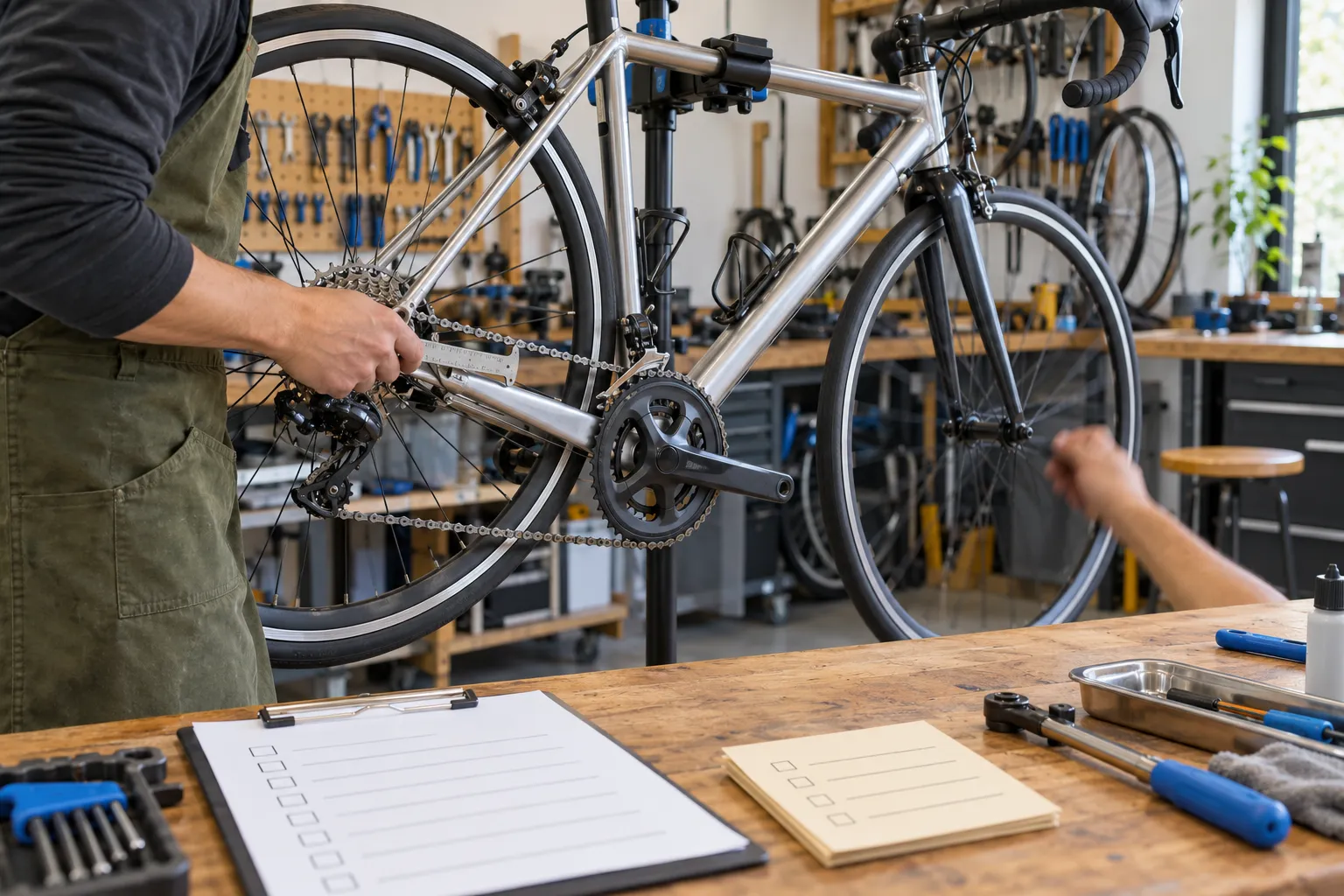
Decide what “not a project” means
For a daily-use bike, a practical definition is:
- correct size and suitable type;
- structurally sound frame, fork, wheels, and cockpit;
- secure wheels and predictable brakes;
- tyres safe enough for a test ride;
- every intended gear available without the chain jumping;
- no missing proprietary part needed to make it functional;
- a first-service list you can fund and schedule immediately.
Cosmetic scratches, old bar tape, or a worn saddle do not automatically create a project. A seized seatpost, cracked rim, mismatched drivetrain, undocumented electronic part, or recurring broken spokes can.
Screen the listing before travelling
Ask for current, well-lit photographs of both sides, the drivetrain, brake surfaces, tyre sidewalls, rims, frame joints, fork, and serial number area. Request the exact make, model, year, size, component model codes, ownership history, and known faults.
Then ask three useful questions:
- What would you repair if you kept it for another year?
- When were the chain, tyres, brake pads, cables or brake fluid last serviced?
- May a bike shop inspect it before payment?
A seller may not know technical answers. That is different from refusing clear photographs, contradicting the listing, hiding the serial, or rushing payment. Use how to avoid buying a stolen used bike alongside the mechanical check.
Separate consumables from warning signs
Normal wear can be budgeted: chain, cassette, tyres, tubes or sealant, brake pads, cables, bar tape, and a basic service. Those items still reduce the fair purchase price.
The following need more caution:
- dents, cracks, deep gouges, ripples, or suspicious paint repair;
- wheel cracks, repeated spoke failures, or a rim that will not stay true;
- play, grinding, or binding in steering, hubs, crank, or pedals;
- a seatpost or stem that will not move;
- rounded fasteners or damaged threads;
- mixed parts with uncertain compatibility;
- electronic components that cannot be charged, paired, or demonstrated;
- a fault described as “just needs adjustment” when the adjustment has not been done.
Do not diagnose carbon integrity from a listing photograph. If damage is suspected, make professional assessment a condition of purchase or leave.
Run one controlled test
Start stationary. Confirm both wheels are secure, squeeze both brakes, rock the bike with the front brake applied to check for obvious play, inspect the tyres, and turn the handlebar smoothly. Lift each wheel and spin it. Rotate the cranks by hand while keeping fingers and clothing away from the drivetrain.
Only test ride when those checks pass. In a quiet, flat area:
- brake each wheel progressively;
- shift through the usable gears under light load;
- listen for repeated clicks, knocks, or pings;
- check that the seatpost and handlebar stay fixed;
- confirm the bike tracks and steers predictably.
Follow the fuller used-road-bike test ride and stop immediately when a safety-critical symptom appears.
Build a repair reserve with real quotes
List every fault in one of three columns:
- Required before riding — brakes, tyres, wheel security, structural assessment.
- Required soon — worn drivetrain, bearings, cables, overdue hydraulic service.
- Optional — cosmetics, preferences, performance upgrades.
Price parts, labour, taxes, and unavailable adapters. Ask a local shop for a range when the job is beyond your tools. Add uncertainty for faults that cannot be tested. A purchase is not cheap if it needs several independent “probably inexpensive” outcomes.
Use how to tell if a used road bike is fairly priced and subtract immediate work from the value of a comparable ready-to-ride bike.
Use a clear walk-away rule
Walk away when any one of these is true:
- fit or intended use is wrong;
- ownership cannot be checked reasonably;
- structural condition is uncertain and inspection is refused;
- required parts are unidentified, proprietary, or unavailable;
- the seller will not allow basic function checks;
- the realistic total exceeds a sound ready-to-ride alternative;
- you need reliable transport immediately but repair timing is unknown.
Your time matters. A mechanically interesting bargain can be perfect for someone seeking a workshop project and wrong for someone who needs Monday transport.
Your next step
Send the seller a request for the exact model, size, serial-area photo, close component photos, fault list, and permission for inspection. Put the asking price, mandatory repair quote, and contingency beside the price of one ready-to-ride alternative. If the used option only wins after ignoring time or uncertainty, it is already a project.
Sources and further reading
- r/cycling demand signal: concern that a used utility bike could become an unreliable repair project — used as an editorial question signal, not as a condition assessment.