How to choose a road bike when you are very tall
Use geometry, component limits, wheelbase, fit, and a realistic test ride to find a controllable road bike at the top of size charts.
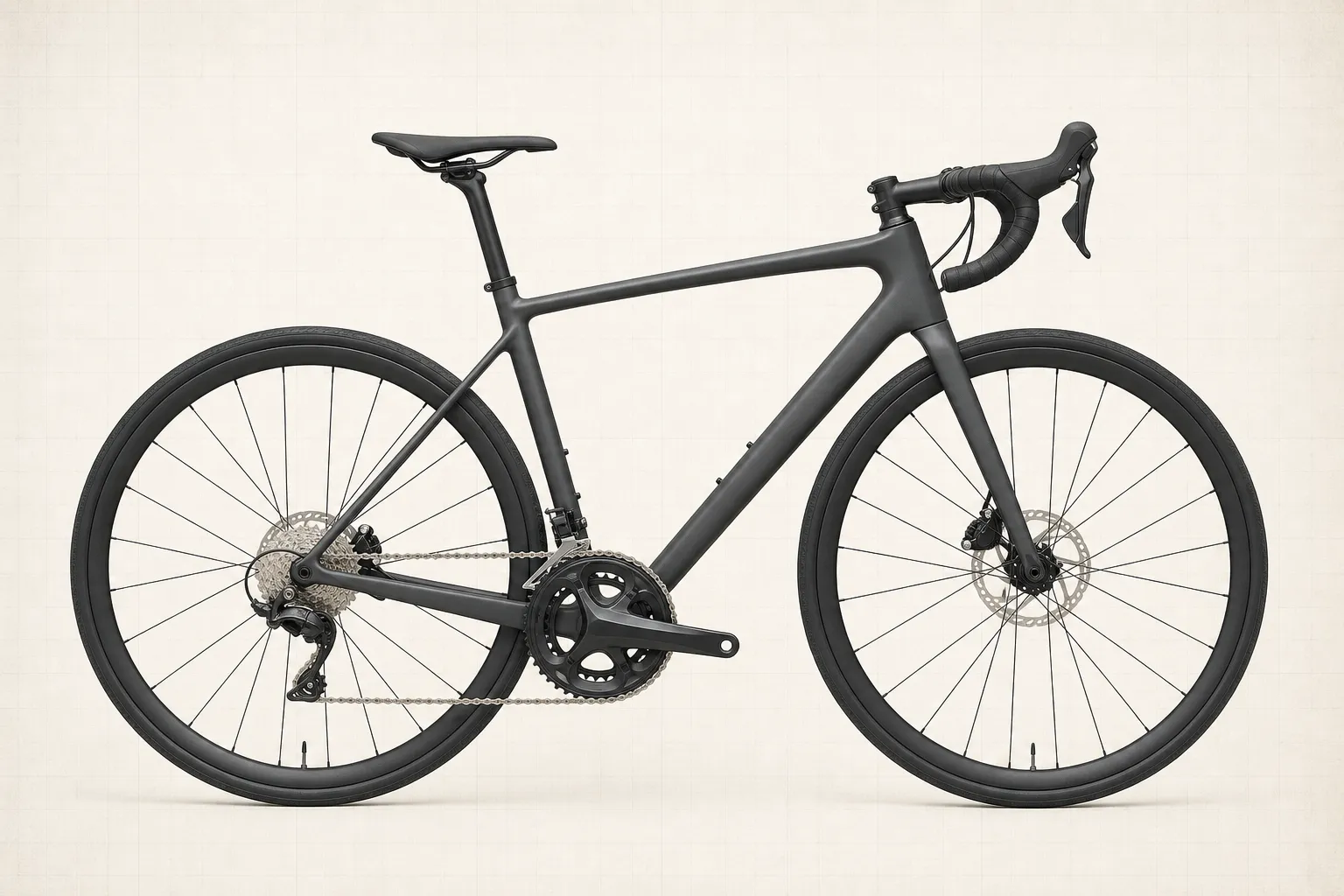 Field guide / road-bike-sizing-for-very-tall-riders
Before you view or pay
Check fit, condition, and starter gear first
Use the buying checklist to choose the right path: used-bike viewing, first-bike fit and type, hidden repair costs, or starter gear.
Very tall riders should shop by usable geometry and component limits, not by finding the largest label in stock. The right bike must provide enough saddle height and cockpit length while preserving safe seatpost insertion, sensible steering, secure brake access, and the maker’s load limits.
The short answer: start with brands that publish a size for your measured height, but compare stack, reach, seat angle, wheelbase, standover, and component ranges for the exact model. Test the complete bike or use a pre-purchase fit. Do not turn a too-small frame into a tall rider’s bike with an extreme seatpost and stem.
Why “XL” is not a measurement
A recent beginner thread from a rider around 6 ft 8 in generated model suggestions, but the stronger lesson is that one brand’s XL can overlap another brand’s L, XXL, or numbered size. Some road-bike families stop before the same rider height that another model supports.
Even within a stated height range, two riders can have very different inseams, torso lengths, arm spans, shoulder widths, mobility, and mass. Those differences affect saddle height, handlebar reach, bar width, and component choice.
Use height to make a shortlist. Use geometry and a real position to make the decision.
Record the measurements that narrow the search
Measure barefoot height and cycling inseam carefully, more than once. A professional pre-purchase fit can add a target saddle position and handlebar stack/reach range. If you already own a comfortable bike, record its setup as a reference—even if it is a hybrid or mountain bike.
For every candidate, capture:
- frame stack and reach;
- effective top-tube length;
- seat-tube angle;
- head-tube length and front-end configuration;
- wheelbase, front-centre, and standover;
- maximum saddle height and seatpost insertion limits;
- included stem length, bar reach/drop, and bar width;
- crank length and gearing;
- tyre clearance and wheel size;
- rider and total-system weight limits.
The frame’s stack and reach make cross-brand comparison more useful, but they do not describe the final hood position. Stem, spacers, handlebar shape, and control placement complete the cockpit.
Check saddle range before cockpit changes
The saddle needs to reach a stable pedalling position while the seatpost remains beyond its minimum-insertion mark and within any frame-specific maximum extension. An extra-long post is not automatically approved for every frame.
If the saddle cannot go high enough safely, reject the bike. If it can, assess fore-aft position based on pedalling and balance—not as a way to correct handlebar reach.
Then inspect the front end. A small stem change may be normal. A very long stem on a cramped frame can alter handling and still leave insufficient stack. Excessive spacers or an upturned stem beyond the bike’s instructions can signal that a taller-stack model is the better answer.
Our guide to a road bike that feels too big or too small explains the patterns without prescribing one adjustment from one symptom.
Do not ignore the rest of the bike
Tall riders often focus so closely on frame reach that they miss other constraints.
Handlebar width and control access
The stock bar may not suit your shoulders or hands. Confirm you can brake confidently from the hoods and drops. On an integrated one-piece cockpit, changing width or reach can be much more expensive than changing a conventional bar and stem.
Gearing
A tall or heavy rider does not automatically need hard gearing. Choose low gears for local gradients and current fitness. Easy gearing supports cadence and control on steep climbs.
Wheels and load limits
Check the maker’s limits for the complete bike and relevant components, including luggage. Wheel durability depends on design, build quality, spoke count and tension, rim, hub, tyre, terrain, and maintenance—not only wheel diameter.
Crank length
Long legs do not automatically require the longest available crank. Crank choice interacts with hip and knee motion, cadence, gearing, ground clearance, and fit. Treat it as a fit decision, not a height-chart reflex.
Test handling, not just leg extension
Set a plausible saddle height and pressure before the test. Ride long enough to include:
- controlled starts and stops;
- low-speed turns in both directions;
- braking from the hoods and drops;
- seated and standing pedalling;
- a gentle climb and descent where safe;
- looking behind while holding a predictable line.
Notice knee and handlebar clearance, toe overlap, weight distribution, neck position, and whether the front wheel feels stable. A bike can offer enough saddle height yet still feel cramped, excessively low, or nervous.
Do not accept “you will get used to it” as the only answer to locked elbows, inaccessible brakes, or immediate neck strain. New positions require adaptation, but a test ride should still provide control.
Buying when shops do not stock your size
Call before travelling and ask whether the exact size can be built for a deposit, transferred, rented, or returned after a proper indoor setup. Get the return conditions in writing before an online order.
An independent fitter can use an adjustable fit bike to identify candidate frames. Ask for a report with ranges, not one magic set of coordinates. Then confirm the production bike can achieve them using approved parts.
For a used bike, request photographs of the size marking, serial information, uncut steerer and spacers, seatpost insertion, cockpit, and complete geometry chart. A bargain that needs a rare fork, proprietary cockpit, wheels, and seatpost may not be a bargain.
Use the used-bike viewing checklist and never let scarcity rush the structural inspection.
A decision order for very tall beginners
- Confirm the manufacturer explicitly supports your height and load for that model.
- Verify saddle-height range and seatpost insertion.
- Compare frame stack and reach against a target position.
- Check cockpit adjustability, brake access, and component availability.
- Confirm gearing, tyres, wheels, and total-system limits for the intended riding.
- Take a meaningful test ride or obtain a pre-purchase fit.
- Budget for normal contact-point refinement without relying on extreme changes.
If choices are limited, an endurance road bike or all-road model with more stack and tyre clearance may be easier to configure than a low race bike. The category label is not the answer, but it can point toward a more workable geometry.
Run every candidate through the road-bike buying checklist before placing a special order.