Is your bike fork steerer cracked or broken? Stop riding
Recognise a separated or cracked fork steerer, avoid a catastrophic test ride, and document the bike for professional inspection and recall checks.
 Field guide / broken-or-cracked-bike-fork-steerer
The fork steerer is the tube that passes through the frame’s head tube and connects the fork to the stem and handlebar. If it is cracked or has separated, the bicycle has lost a primary steering structure. The correct diagnosis begins with do not ride.
The short answer: unload the bike, keep others from riding it, photograph the fault without forcing the parts, record the model and serial number, check official recalls, and arrange professional inspection or fork replacement. A ride around the block cannot prove a damaged steerer safe.
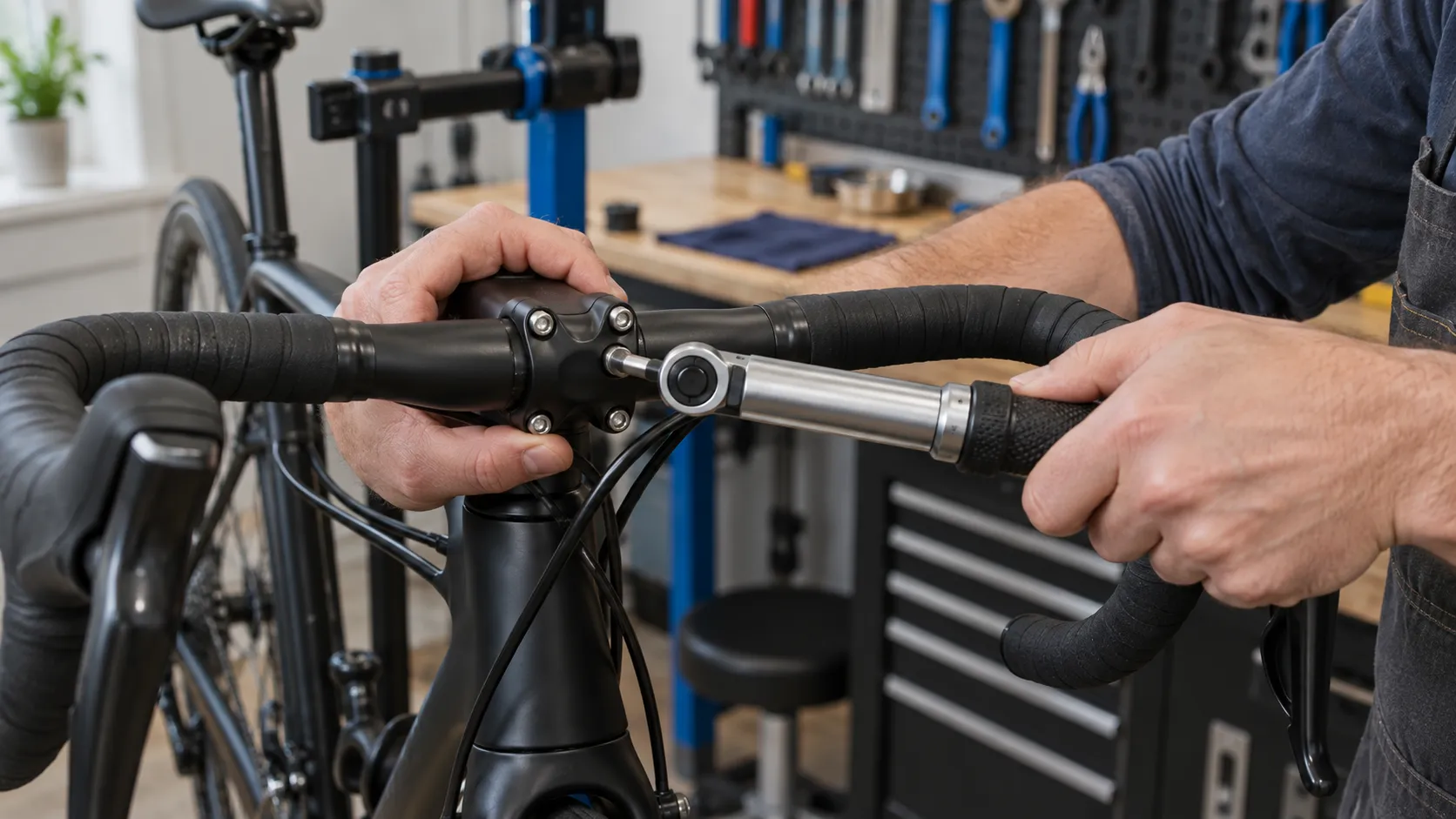
A loose headset and a broken steerer are not the same fault
A recent r/bikewrench post showed a confusing front-end failure that received a clear, highly upvoted identification: the steerer had snapped and the fork needed replacement. That thread is a demand signal, not a remote inspection service.
A loose headset may knock when the front brake is applied and can sometimes be adjusted using the correct procedure. A broken steerer means the structural tube itself is cracked or separated. Tightening the top cap or stem cannot restore the original structure.
If you cannot distinguish them, treat the bike as unsafe until a qualified mechanic can.
Signs that require an immediate stop
Do not ride when you find:
- a visible crack, split, crushed area, or complete separation in the steerer or fork;
- the handlebar and stem moving independently of the front wheel in a way adjustment cannot explain;
- the fork crown, blades, or steerer bent after impact;
- carbon fibres, delamination, bulging, unusual whitening, or a deep score near the stem or headset;
- a sudden change in steering alignment, grinding, or front-end instability after a crash;
- a gap or component position that differs from the manufacturer’s assembly drawing;
- a safety recall that instructs owners to stop riding your exact model.
Do not keep flexing the area to make the crack more visible. Additional loading can extend damage.
What to do at the roadside
- Move yourself and the bicycle away from traffic without riding it.
- Keep downward and twisting load off the handlebar.
- Do not tighten random headset or stem bolts.
- Do not tape, clamp, splint, or glue the steerer for a “careful” ride home.
- Arrange a vehicle pickup or another method that does not use the bicycle’s steering structure.
- Tell anyone handling the bike that the fork or steerer may be structurally failed.
Walking beside a bike can still load the bar. If the front end is separated or unstable, carry or support it without relying on the handlebar.
Document before dismantling
Take clear photographs of:
- the complete bicycle from both sides;
- the stem, spacers, headset cover, fork crown, and visible steerer;
- the damaged area in good light;
- model name, serial number, and fork markings;
- stem model and any torque markings;
- damage from the crash, transport event, or obstruction that came before the symptom.
Write down what happened and whether anyone recently changed the stem, spacers, headset, or fork. Do not remove parts merely to improve the photo if removal requires loading or clamping damaged material.
Check recalls without generalising
Search the bike and fork manufacturers’ safety pages and your national recall database using the exact model and serial range.
In March 2026, the US Consumer Product Safety Commission published a recall for certain Specialized Turbo Como SL forks because the steerer could develop a fatigue crack leading to progressive failure; the stated remedy was to stop use and obtain replacement through an authorised retailer. This example shows why exact recall checks matter. It does not mean other models share that defect.
CPSC has also published previous fork recalls with specific model and steerer identifiers. Match every detail and follow the official remedy.
Why material changes the inspection, not the stop rule
Metal may bend, crack, corrode, or fracture. Carbon fibre may conceal impact damage and can fail without first showing the same visible deformation as metal. Trek’s 2026 owner manual warns that damaged carbon parts can break suddenly and tells riders to stop after a suspected damaging impact and seek service.
The immediate action is the same for either material: stop riding. Material expertise matters later, when a qualified person identifies the failure and replacement requirements.
Do not improvise a fork replacement
A replacement fork must match more than wheel size. The mechanic may need to confirm:
- steerer type, diameter, and required length;
- headset and crown-race interface;
- axle standard and hub spacing;
- brake mount and rotor or rim compatibility;
- tyre and mudguard clearance;
- fork offset, axle-to-crown dimension, and frame compatibility;
- manufacturer restrictions, compression plug, spacers, and stem compatibility;
- required cutting, preparation, and torque procedure.
An incompatible fork can alter geometry or fail to secure the wheel, brake, headset, or stem correctly. Do not buy from a photograph alone.
Ask the mechanic for a written finding
Request:
- the failed component and likely failure location;
- whether adjacent stem, headset, frame, brake, and wheel parts need inspection;
- the exact replacement specification;
- whether a recall, warranty, or crash-replacement programme applies;
- which existing parts should not be reused;
- a written safety check after assembly.
Keep the failed part until warranty or recall instructions say otherwise. Do not resell or give away a structurally unsafe fork.
Your next step
Mark the bike do not ride, record its exact identity, and arrange transport to a qualified shop. If the symptom is only play with no suspected structural damage, use the loose-headset guide to describe it—but do not use adjustment advice to override a visible crack or impact history.
Sources and further reading
- CPSC: 2026 Specialized Turbo Como SL fork steerer recall
- CPSC: Giant fork and steerer recall with model-specific identifiers
- Trek 2026 bicycle owner’s manual: impact and carbon damage warnings
- Trek owner manual: incompatible stems, carbon steerers, and unsafe modifications
- r/bikewrench reader context: recognising a separated steerer as a fork-replacement fault