Should your first bike be an aero race bike for commuting and triathlon?
Choose one first bike for commuting, road training, and a first triathlon by testing fit, cargo, security, repairability, and race rules before speed claims.
 Field guide / aero-race-bike-commuting-first-triathlon
Before you view or pay
Check fit, condition, and starter gear first
Use the buying checklist to choose the right path: used-bike viewing, first-bike fit and type, hidden repair costs, or starter gear.
An aero race bike can cover a commute, road training, and a first triathlon, but it is rarely the safest default for a completely new rider. A comfortable endurance road bike with suitable tyres, normal bottle mounts, replaceable cockpit parts, and secure luggage options usually handles the three jobs with fewer compromises.
The short answer: buy the bike that fits the daily 90% first. For a beginner who will commute and train, prioritise fit, brake control, tyre clearance, carrying, security, and service support. You can race a first triathlon on a normal road bike; you do not need to make every commute on a fragile-feeling race setup to qualify.
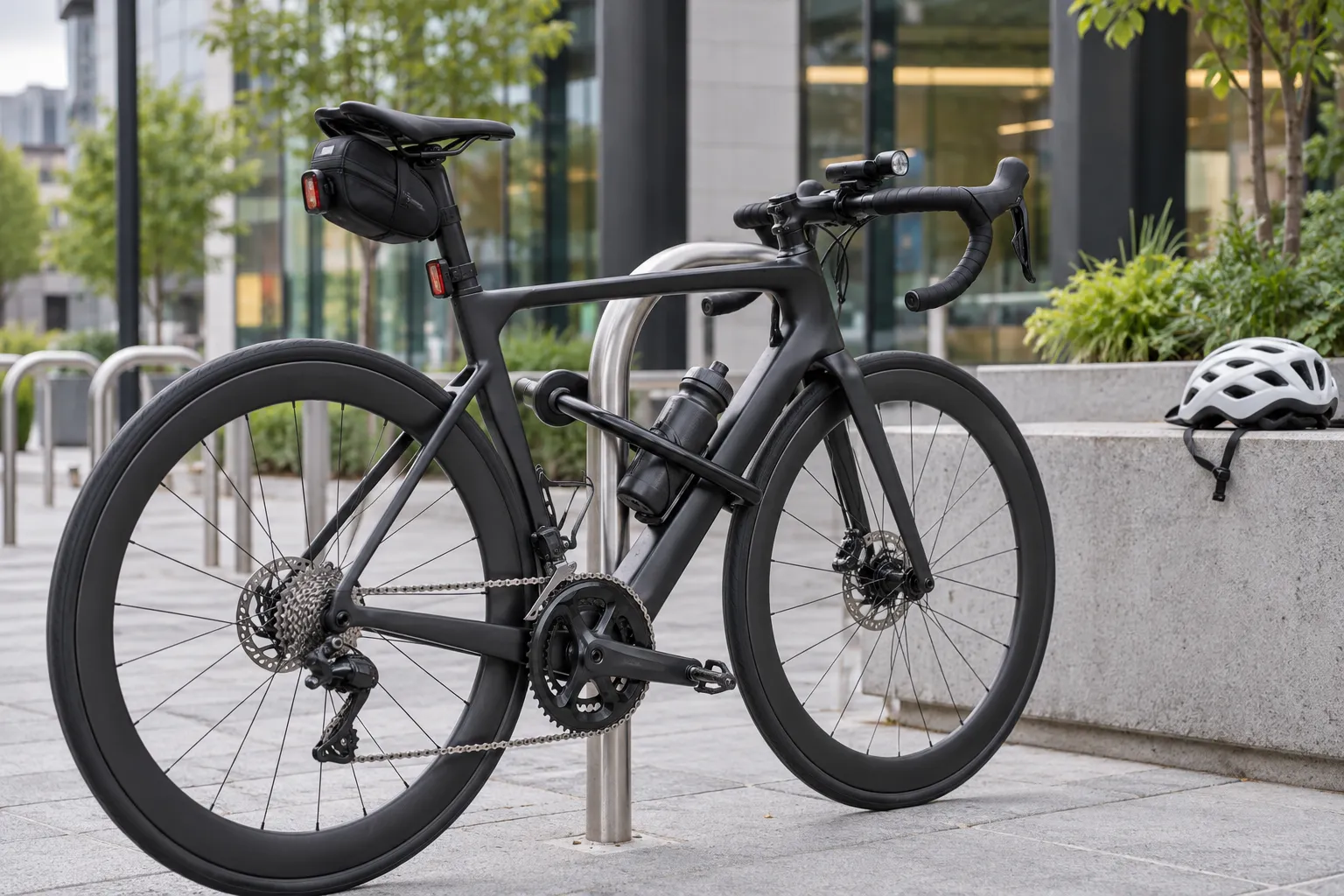
Start with the jobs, not the price ceiling
Write down the real week:
- commute distance and road surface;
- whether the bike stays indoors or at a public rack;
- laptop, clothes, food, and lock you must carry;
- wet-weather use and mudguard needs;
- training duration and terrain;
- target triathlon distance and whether it is draft-legal;
- access to a shop and your willingness to maintain the bike.
An expensive aero frame does not solve incompatible demands. Deep wheels can be more demanding in gusts, one-piece cockpits can limit easy fit changes, and some race frames have limited luggage or mudguard options. None of those features is automatically bad; each needs to match the use.
A road bike is enough for a first triathlon
USA Triathlon’s beginner guidance says riders may start with a road bike or triathlon bike and that the bike they already own is the place to begin. Its getting-started guidance is even broader: a road, triathlon, or mountain bike can work, subject to the event’s rules and a proper safety check.
That makes a road bike the flexible first purchase. It supports skills practice, group rides, commuting, and normal road training. If triathlon becomes a lasting priority, you can later assess a dedicated triathlon bike or compatible clip-on aero bars with better knowledge of your fit and events.
Check the actual race rules. USA Triathlon notes that draft-legal racing permits road bikes and prohibits aero bars and time-trial bicycles. Other events differ. Do not buy a cockpit around an assumed rule.
When the aero race bike can make sense
It can be a rational one-bike choice when:
- you have tested the exact size and can comfortably reach both brakes;
- nearly all commuting is smooth, paved, and luggage-light;
- the bike is stored securely at both ends;
- tyre clearance suits your roads;
- replacement cockpit, hanger, and electronic parts are available;
- the shop can service the routing and brakes;
- you accept cosmetic wear and higher replacement costs;
- its handling feels calm to you, not merely exciting for ten minutes.
The label “aero” is not a fit guarantee. Compare stack, reach, spacer allowance, bar width, stem length, and lever reach. A costly wrong size remains wrong.
When an endurance road bike is the stronger answer
Choose the endurance route when you need a less aggressive starting position, more tyre clearance, easier gearing, stable handling, or adaptable cockpit parts. Look for mounting solutions you will actually use rather than assuming every frame accepts a rack or full mudguards.
An endurance bike is still a road bike. It can be quick, and the rider’s position, tyres, clothing, pacing, and fitness matter greatly. Use our endurance-versus-race beginner guide to compare geometry rather than marketing names.
One bike or two?
Two bikes can be practical when secure parking is poor, the commute is dirty year-round, or missing a workday because a proprietary part is unavailable would be costly. A simple commuter absorbs locks, luggage, salt, and public parking while the training bike stays available.
One bike is sensible when storage space is limited and the commute closely resembles your training roads. Budget for durable tyres, lights, carrying, locks, maintenance, and possible transport home. A second bike is not mandatory; operational backup is the real need.
Use a buying test that exposes compromises
On the test ride:
- brake firmly from the hoods with one or two fingers;
- look behind without the bike wandering;
- start, stop, and make tight low-speed turns;
- ride rough pavement and a climb in the easiest gear;
- hold your intended normal position for at least 20 minutes;
- confirm where the lock, bag, lights, bottles, and repair kit will go.
Then ask the seller for the exact tyre-clearance, torque, service, and cockpit-adjustment documentation. Add the complete first-year cost to the road-bike buying checklist, not just the sale price.
Your next step
Build a shortlist of one endurance bike and one race bike that both pass the commute requirements. Test them on braking, rough road, easy gearing, and sustained position. If the aero bike wins those tests, buy it for evidence—not because a future triathlon makes it compulsory.
Sources and further reading
- USA Triathlon: road bike or triathlon bike can start your triathlon journey
- USA Triathlon: a first event can use the bike you already have
- USA Triathlon: draft-legal events allow road bikes and prohibit aero bars and TT bikes
- r/cycling reader context: a beginner considering an aero race bike for a 30 km commute and future triathlon — used as a demand signal; individual opinions were not treated as product testing.